AI Friends Are Rising: Will Human Friendships Become Optional by 2026?
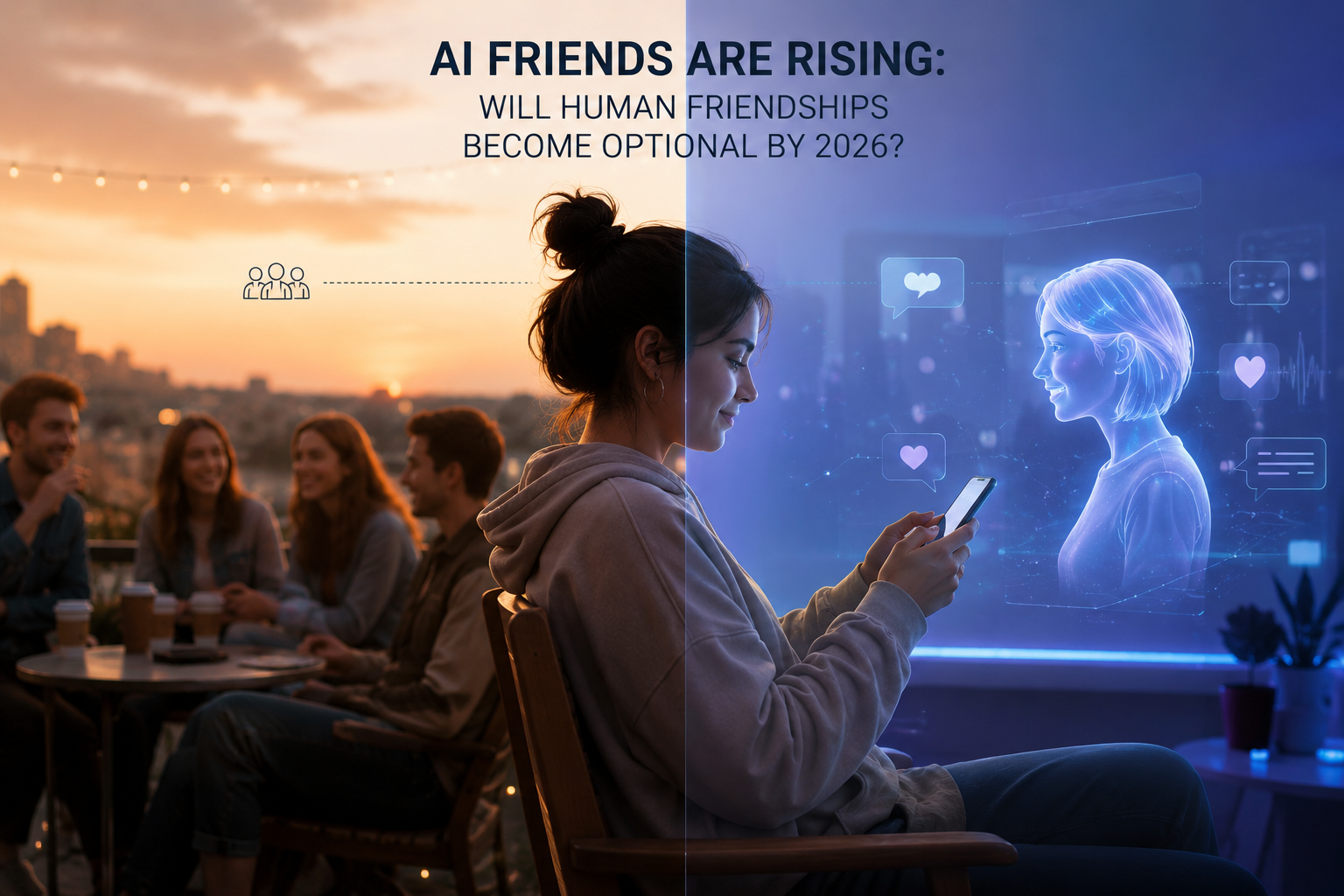
Can AI Friends Replace Human Connection
AI Friends are no longer science fiction.
In 2026, millions of people are spending time talking to AI companions, virtual assistants, and conversational chatbots that can remember preferences, offer emotional support, and hold surprisingly natural conversations.
For some people, AI friends provide comfort in times of loneliness. For others, they are becoming daily companions.
This raises a fascinating question:
If AI companions continue to improve, will human friendships become optional?
The answer is more complicated than it may seem.
What Are AI Friends?
AI Friends are artificial intelligence systems designed to interact with users in a personal and conversational way.
Unlike traditional chatbots, modern AI companions can:
- Remember previous conversations
- Adapt to personality preferences
- Offer emotional support
- Engage in long-term interactions
- Simulate friendship-like experiences
AI companion platforms are growing rapidly because they offer users constant availability and personalized interaction.
Why AI Friends Are Becoming Popular
Loneliness is increasing
Many people today struggle to maintain strong social connections.
Remote work, busy schedules, and digital lifestyles have made genuine social interaction harder for some individuals.
AI Friends provide an always-available alternative.
People Want Judgment-Free Conversations
One reason AI Friends appeal to users is that they do not criticize, interrupt, or judge.
Users can share thoughts and feelings freely without fear of embarrassment.
Technology Feels More Human Than Ever
Advances in artificial intelligence have made conversations feel more natural.
Many users report feeling emotionally connected to AI companions despite knowing they are interacting with software.
What Makes AI Friends Different From Human Friends?
Constant Availability
Human friends have jobs, families, and responsibilities.
AI Friends are available 24 hours a day.
Personalized Interactions
AI systems can adapt to individual users and remember preferences over time.
No Social Pressure
AI Friends do not create social anxiety, awkward situations, or interpersonal conflicts.
However, these advantages also reveal some important limitations.
The Benefits of AI Friends
Emotional Support
Some people like having someone to talk to in hard times, or even something to talk to.
Reduced Loneliness
For people who live alone or struggle socially, AI Friends can provide companionship.
Practice for Communication Skills
AI companions may help users practice conversations and improve confidence.
Accessibility
AI Friends can be particularly helpful for individuals who face barriers to traditional social interaction.
The Risks of Replacing Human Connection
Relationships Require Challenge
Human friendships are valuable partly because they involve disagreement, growth, and compromise.
AI companions are often designed to be agreeable.
Emotional Dependency
Users may become overly attached to AI systems.
This raises concerns about emotional dependence on technology.
Reduced Real-World Interaction
Excessive reliance on AI Friends could reduce motivation to build and maintain human relationships.
Privacy Concerns
Many AI companion platforms collect conversation data.
Users should understand how their information is stored and used.
For guidance on digital privacy and online safety, visit the Electronic Frontier Foundation (EFF).
Can AI Friends Replace Real Friendships?
What AI Can Do
AI Friends can:
- Listen
- Respond
- Remember information
- Simulate empathy
- Provide companionship
What AI Cannot Fully Replicate
Human friendships offer experiences that AI cannot completely reproduce:
- Shared memories
- Physical presence
- Genuine emotions
- Mutual growth
- Real-world experiences
AI may imitate friendship, but it does not truly experience it.
For now, human connection remains unique.
Why Experts Are Paying Attention
Researchers and psychologists are increasingly studying how AI companions affect social behavior.
Key questions include the following:
- Will AI reduce loneliness?
- Could AI increase isolation?
- How will younger generations view friendship?
- What ethical responsibilities do AI companies have?
These questions will become more important as AI continues to evolve.
For research on AI and society, readers can explore resources from the
The Future of AI Friends
More Personalized Experiences
Future AI companions will likely become better at remembering conversations and adapting to users.
Integration Into Daily Life
AI friends may eventually be integrated into the following:
- Smartphones
- Smart glasses
- Virtual reality environments
- Wearable devices
A Hybrid Future
Rather than replacing human friendships, AI Friends may become an additional layer of social support.
Many experts believe AI companions will supplement relationships rather than eliminate them.
How to Use AI Friends Responsibly
Maintain Real Relationships
Technology should enhance social life, not replace it.
Use AI as a tool.
Think of AI companions as support systems rather than substitutes for human connection.
Protect Your Privacy
Review privacy settings and understand how personal data is handled.
Stay Aware of Emotional Dependence
Balance digital companionship with real-world interactions.
Conclusion
AI friends are becoming one of the most interesting social technologies of 2026.
They offer companionship, emotional support, and accessibility in ways that previous technologies could not.
However, friendship is about more than conversation.
It involves shared experiences, genuine human emotion, trust, and growth.
While AI Friends might help ease loneliness, they are not likely to fully substitute the importance of human connection.
The future might not be a choice between AI friends and human friends.
Instead, it may be about learning how both can coexist in a healthy and meaningful way.
Suggested Readings:
Why More People Are Using AI as a Personal Therapist
AI Dependency: Are We Losing the Ability to Think for Ourselves?
AI Memory: The Feature That Could Change How We Use Technology Forever
Are Algorithms Deciding What You Believe?
The Attention War: Why Every App Is Fighting for Your Mind





Post Comment