Can AI Be Sustainable? Understanding the Hidden Cost of Intelligence
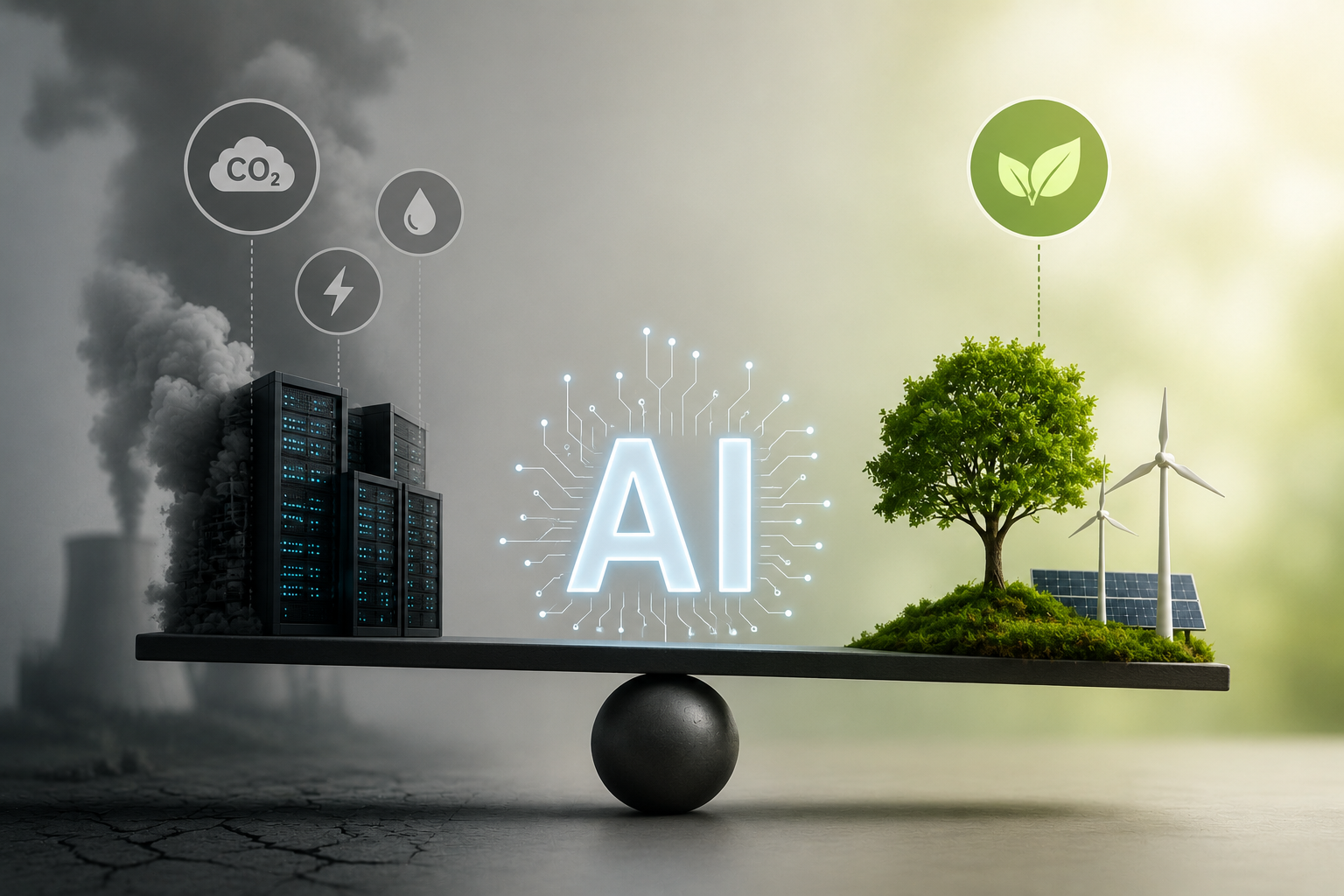
Can AI Be Sustainable as Artificial Intelligence Becomes Part of Everyday Life? This question is becoming increasingly important.
Can AI Be Sustainable? It’s a question that is becoming increasingly important as artificial intelligence becomes part of everyday life.
Millions of people use AI tools daily to write emails, generate images, search for information, summarize documents, and automate tasks. While these technologies feel invisible and effortless, every AI interaction relies on massive data centers, powerful processors, and enormous amounts of energy.
Most users never think about what happens after pressing “Enter” on an AI prompt.
Yet behind every response lies a complex network of servers consuming electricity, water, and computing resources.
As artificial intelligence continues to expand, the challenge is no longer just building smarter systems. The real question is whether we can build AI systems that are environmentally responsible.
What Does AI Sustainability Mean?
“AI sustainability means being able to build, train, and run AI systems with the least possible impact on the environment.
A sustainable AI ecosystem wants to
- Reduce energy consumption
- Lower carbon emissions
- Improve computing efficiency
- Minimize water usage
- Utilize renewable energy sources
The goal is to ensure that technological advancement is not at the cost of environmental health.
The Hidden Infrastructure Behind AI
It seems to happen instantly when people use AI.
But each AI-generated answer needs powerful infrastructure in the background.
Data Centers: The Backbone of Artificial Intelligence
Today’s AI systems run on data centers that house thousands of servers.
Such facilities:
- Process billions of calculations every second
- Store massive amounts of data
- Operate continuously, 24/7
- Require extensive cooling systems
Without these data centers, AI tools would not exist.
Why AI Requires So Much Computing Power
Unlike traditional software, AI models perform complex calculations to generate responses.
Large language models must analyze patterns across enormous datasets, making them significantly more resource-intensive than standard applications.
As AI becomes more advanced, computing demands continue to grow.
The Environmental Impact of AI
Energy Consumption
One of the biggest concerns surrounding AI sustainability is energy use.
Training advanced AI models requires substantial computational resources.
Then there are millions of users using AI systems every day, even after deployment, which causes ongoing energy demands.
As more and more AI is adopted, data centers will consume a lot more electricity globally.
Carbon Emissions
Electricity generation remains dependent on fossil fuels in many parts of the world.
As a result, AI systems indirectly contribute to carbon emissions through their energy consumption.
The environmental impact depends largely on:
- Data center location
- Energy sources used
- Computing efficiency
- Scale of operations
Organizations are increasingly exploring renewable energy solutions to reduce these emissions.
Water Usage
An often-overlooked aspect of AI is water consumption.
Data centers generate substantial heat and require cooling systems to maintain safe operating temperatures.
These cooling systems often consume significant amounts of water.
As AI infrastructure grows, water management is turning into a crucial sustainability issue.
Why AI Demand Is Growing Faster Than Ever
The Rise of Generative AI
Generative AI has transformed how people work and create content.
Users now rely on AI for:
- Content creation
- Research assistance
- Programming support
- Image generation
- Customer service
Every interaction adds to the overall computing demand.
AI Is Becoming Part of Everyday Life
Artificial intelligence is no longer limited to technology companies.
AI now influences:
- Search engines
- Smartphones
- Social media platforms
- Business software
- Educational tools
As adoption grows, sustainability becomes increasingly important.
Can AI Be Sustainable?
The answer is not simply yes or no.
AI can become more sustainable, but achieving that goal requires significant effort across multiple areas.
Improving Model Efficiency
Researchers are developing smaller, more efficient AI models that require less computational power while maintaining strong performance.
This approach reduces the following:
- Energy consumption
- Infrastructure costs
- Environmental impact
Renewable Energy Adoption
Many technology companies are investing heavily in renewable energy.
Solar, wind, and other clean energy sources can help reduce the carbon footprint of AI operations.
Companies are increasingly committing to sustainability targets as demand for AI rises.
Smarter Data Centers
Modern data centers are becoming more efficient through the following:
- Advanced cooling systems
- Energy optimization
- Better hardware design
- Improved resource management
These innovations can significantly reduce environmental impact.
The Role of Users in AI Sustainability
While major technology companies bear most responsibility, users also play a role.
Use AI Purposefully
Not all tasks need artificial intelligence.
“Thoughtful use of AI can reduce unnecessary computational demand.”
Prioritize Quality Over Quantity
Instead of generating multiple versions of the same output, focus on creating clear and effective prompts.
Efficient interactions reduce resource usage.
Support Sustainable Technology
Consumers can encourage responsible innovation by supporting companies that prioritize environmental sustainability.
Balancing Innovation and Responsibility
The challenge facing society is not whether AI should exist.
Artificial intelligence has already demonstrated enormous value in the following:
- Healthcare
- Education
- Scientific research
- Business productivity
- Accessibility
The real challenge is ensuring that innovation remains aligned with environmental responsibility.
Technology should improve human life without creating unsustainable ecological costs.
What the Future of Sustainable AI Might Look Like
The future of AI sustainability will likely depend on three key developments:
More Efficient Hardware
New generations of processors are being designed to perform AI tasks using less energy.
Better AI Architectures
Researchers continue to develop methods that improve efficiency without sacrificing performance.
Increased Transparency
Users and policymakers are demanding greater transparency regarding the environmental impact of AI systems.
This may encourage more responsible development practices across the industry.
For readers interested in understanding the broader environmental impact of digital technologies, the
The Internationall Energy Agency (IEA)Digitalizationn and Energy Report provides valuable research and insights.
Conclusion
Can AI Be Sustainable?
Ultimately, Can AI Be Sustainable will depend on how responsibly governments, companies, and users approach technological growth.
AI offers tremendous opportunities to improve productivity, solve complex problems, and accelerate innovation.
However, every AI interaction carries an environmental cost that is often invisible to users.
As artificial intelligence becomes more deeply integrated into everyday life, sustainability can no longer be treated as an afterthought.
The future of AI will not be defined solely by how intelligent machines become.
It will also be defined by whether that intelligence can be developed responsibly, efficiently, and sustainably.
Suggested Readings:
AI Dependency: Are We Losing the Ability to Think for Ourselves?
Will AI Replace Google Search?
https://rategears.com/is-ai-going-to-replace-google-search-what-users-are-choosing-in-2026
AI Memory: The Feature That Could Change How We Use Technology Forever
The Attention War: Why Every App Is Fighting for Your Mind
Are We Living in a Digital Maya?





Post Comment