Are Algorithms Deciding What You Believe?
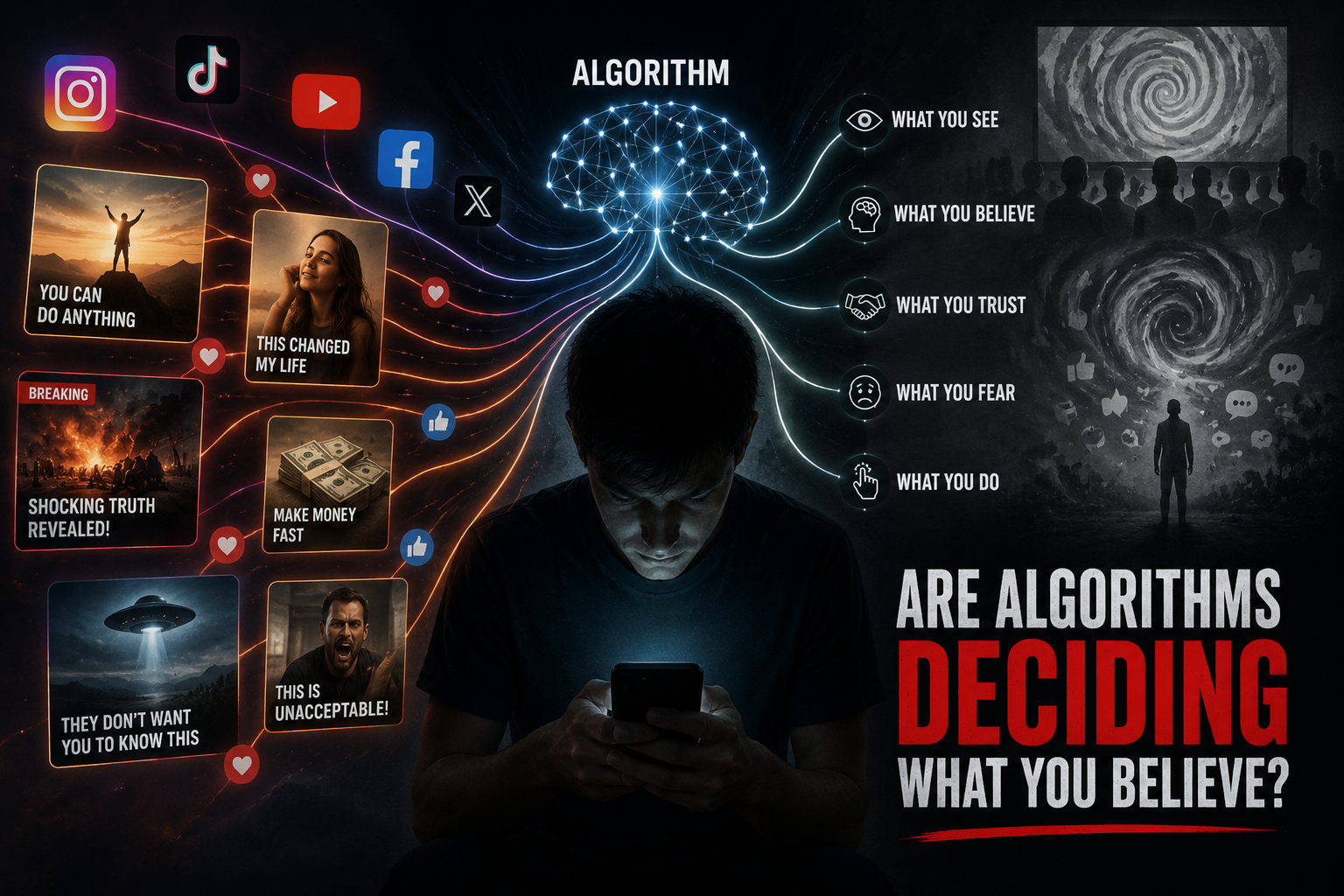
What If Your Feed Is Shaping Your Beliefs Without You Realizing It?
From viral videos to breaking news, social media algorithms quietly decide which content appears on your screen. Understanding how they work is becoming essential in today’s digital world.
Have you ever noticed that your social media feed seems to know exactly what will keep your attention?
One video leads to another. One opinion is followed by similar opinions. Before long, your feed starts to feel like a reflection of your own beliefs.
But what if that isn’t happening by accident?
In 2026, social media algorithms have become some of the most powerful digital systems in human history. They influence what we watch, what we read, what we buy, and even how we think.
This raises an important question:
Are algorithms helping us discover information, or are they quietly shaping what we believe?
What Are Social Media Algorithms?
Social media algorithms are automated systems that decide which content appears in your feed.
Their goal is simple:
- Keep users engaged.
- Increase time spent on the platform.
- Encourage interaction.
- Generate advertising revenue.
Platforms such as:
- TikTok
- YouTube
- X (Twitter)
They all rely heavily on algorithms to tailor content to each user.
Rather than putting it all on the same level, these systems will prioritize content that they think you are most likely to engage with.
How Social Media Algorithms Learn About You
Every action sends signals to the platform.
Algorithms analyze:
- Likes
- Comments
- Shares
- Watch time
- Search history
- Followed accounts
Even a few extra seconds spent viewing a post can tell an algorithm that you’re interested in a particular topic.
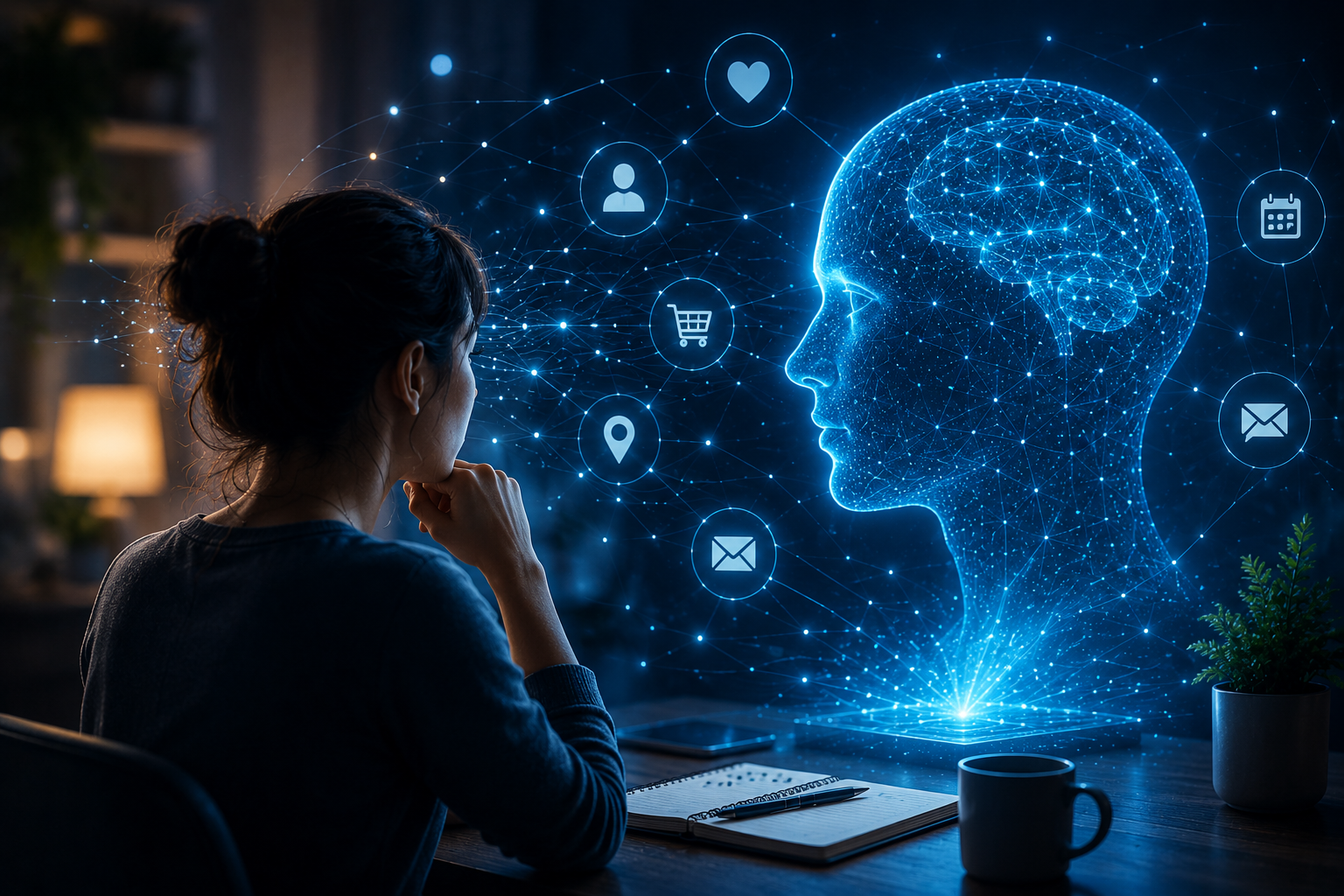
Over time, platforms build detailed profiles of user interests and behavior.
The Rise of Personalized Reality
When Everyone Sees a Different Internet
Two people searching for similar topics may receive completely different content recommendations.
This creates what experts call a personalized reality.
The information you see online is increasingly filtered through algorithmic systems designed specifically for you.
While personalization can improve relevance, it can also limit exposure to different viewpoints.
Echo Chambers and Filter Bubbles
What Is an Echo Chamber?
An echo chamber occurs when users are repeatedly exposed to information that reinforces existing beliefs.
As algorithms learn your preferences, they often recommend the following:
- Similar opinions
- Similar creators
- Similar news sources
Over time, alternative perspectives may become less visible.
What Is a Filter Bubble?
A filter bubble is a personalized information environment in which users unknowingly see only a limited portion of the available information.
The result can be a distorted understanding of reality.
Why Algorithms Favor Emotional Content
Algorithms are designed to maximize engagement.
Research consistently shows that emotionally charged content often receives more interaction.
Examples include:
- Outrage
- Fear
- Controversy
- Surprise
- Excitement
Because of this, algorithms may amplify content that generates strong emotional reactions, even if it is misleading or incomplete.
How Algorithms Can Influence Beliefs
Repetition Creates Familiarity
Psychologists have long observed that repeated exposure to information increases perceived credibility.
The more often users encounter a claim, the more likely they may be to accept it as true.
Social Proof Shapes Decisions
When people see:
- Millions of views
- Thousands of likes
- Viral engagement
They may assume the content is trustworthy.
Algorithms often amplify content that already performs well, creating a cycle of increased visibility and influence.
The Positive Side of Algorithms
Not all algorithmic influence is harmful.
Social media algorithms can help users
- Discover educational content.
- Learn new skills.
- Find communities.
- Stay informed about interests.
- Access relevant information quickly.
Personalization can improve user experience when balanced with diverse perspectives.
The Risks of Algorithmic Influence
Misinformation Spread
False information can spread rapidly when engagement becomes the primary ranking factor.
Polarization
Users may become increasingly divided when exposed only to viewpoints that reinforce existing beliefs.
Reduced Critical Thinking
Constantly consuming personalized content can discourage users from questioning information.
Digital Manipulation
Algorithms can subtly influence behavior without users fully realizing it.
How to Take Back Control
1. Diversify Your Information Sources
Follow creators and publications with different viewpoints.
2. Question Viral Content
Popularity does not always equal accuracy.
3. Verify Information
Use trusted sources before accepting claims as fact.
For media literacy resources, visit:
https://www.commonsensemedia.org
4. Be Aware of Personalization
Remember that your feed is designed specifically for you.
It is not necessarily a complete representation of reality.
Are AI-Powered Algorithms Becoming More Powerful?
The next generation of algorithms uses artificial intelligence to understand behavior more deeply than ever before.
Modern AI systems can analyze the following:
- Interests
- Habits
- Emotions
- Engagement patterns
This allows platforms to deliver increasingly personalized experiences.
As AI continues to advance, understanding algorithmic influence will become an essential digital literacy skill.
Conclusion
Social media algorithms do not directly control what people believe.
However, they play a significant role in shaping what information people see, what conversations they join, and what ideas receive attention.
The challenge is not simply the existence of algorithms.
The challenge is learning how to use digital platforms without allowing automated systems to determine our understanding of the world.
In an age of personalized information, awareness may be the most important skill of all.
Related Reading
The FOMO Machine: How Social Media Profits From Your Fear of Missing Out
Digital Maya: How Social Media Creates the Illusion of a Perfect Life
Deepfakes in 2026: Can You Still Trust What You See Online?
What Happens When Your AI Knows More About You Than Google Does?



Post Comment