The FOMO Machine: How Social Media Profits From Your Fear of Missing Out
Introduction
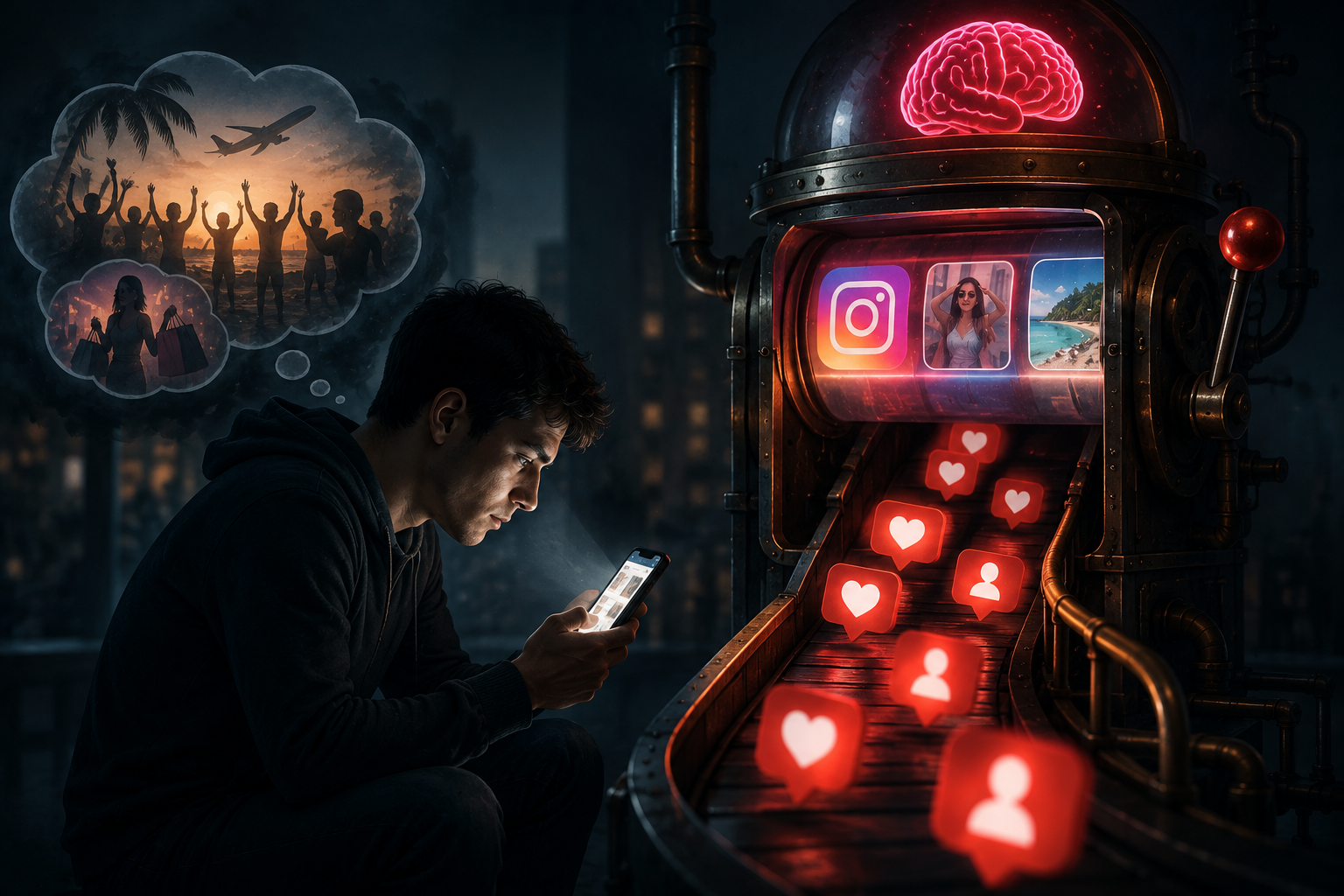
Have you ever opened Instagram for just five minutes and ended up scrolling for an hour?
Have you ever felt anxious after seeing friends on vacation, influencers buying expensive products, or people celebrating achievements that seem out of reach?
If so, you’ve experienced FOMO—the Fear of Missing Out.
FOMO has become one of the most powerful forces shaping online behavior. Social media platforms know that people naturally compare themselves with others, and many digital systems are designed to keep users engaged through curiosity, comparison, and constant updates.
The result? More screen time, more engagement, and more profit for social media companies.
But how exactly does this work, and why is FOMO becoming such a major issue in the digital age?
What Is FOMO?
FOMO (Fear of Missing Out) is the feeling that others are experiencing something exciting, rewarding, or important while you are not.
It often creates thoughts such as the following:
- “Everyone is having a better life than me.”
- “I’m falling behind.”
- “I need to stay updated.”
- “I might miss something important.”
While FOMO existed before social media, modern platforms have amplified it on a massive scale.
Why Social Media Is the Perfect Environment for FOMO
Social media platforms constantly expose users to carefully selected highlights of other people’s lives.
Most users share:
- Successes
- Vacations
- Celebrations
- New purchases
- Major achievements
Rarely do they share:
- Failures
- Loneliness
- Financial struggles
- Anxiety
- Everyday reality
This creates an illusion that everyone else is happier, more successful, and living a more exciting life.
How Social Media Profits From FOMO
1. Endless Scrolling Keeps You Engaged
Most platforms use infinite scrolling.
There is always another post, another video, or another story waiting.
This creates a constant feeling that something important may appear if you keep scrolling.
More scrolling means:
- More advertisements viewed
- More user data collected
- More platform revenue
2. Notifications Trigger Curiosity
Notifications are designed to pull users back repeatedly.
Examples include:
- Someone liked your post
- Someone mentioned you
- A friend uploaded a story
- A creator posted new content
These alerts create a sense of urgency that feeds FOMO.
3. Stories Create Artificial Urgency
Stories disappear after 24 hours.
This temporary content encourages users to check frequently because they fear missing updates.
The strategy works because humans naturally dislike losing opportunities.
4. Algorithms Reward Emotional Content
Social media algorithms prioritize content that generates strong emotional reactions.
This often includes:
- Luxury lifestyles
- Viral trends
- Breaking news
- Controversial opinions
- Celebrity updates
Such content increases engagement while also increasing feelings of comparison and FOMO.
The Psychology Behind FOMO
Social Comparison
Humans naturally compare themselves with others.
Social media provides endless opportunities for comparison.
When people repeatedly see idealized versions of others’ lives, they may begin to feel inadequate.
Validation Seeking
Many users unconsciously seek validation through:
- Likes
- Comments
- Shares
- Followers
The temporary satisfaction can create a cycle where people return repeatedly for digital approval.
Fear of Exclusion
Throughout history, belonging to a group was important for survival.
FOMO taps into this deep psychological need by making people feel excluded from experiences and conversations.
The Hidden Costs of FOMO
Increased Anxiety
Constant comparison can increase stress and emotional exhaustion.
Reduced Focus
Frequent checking of social media interrupts productivity and concentration.
Lower Self-Esteem
People often compare their real life to someone else’s highlight reel.
Digital Burnout
The pressure to stay connected all the time can become mentally draining.
How to Recognize FOMO in Your Own Life
You may be experiencing FOMO if you:
- Check social media repeatedly without a clear reason.
- Feel anxious when away from your phone.
- Compare your life to influencers.
- Feel pressured to follow every trend.
- Struggle to enjoy the present moment.
Recognizing the pattern is the first step toward breaking it.
How to Break Free From the FOMO Cycle
1. Limit Social Media Consumption
Set daily limits on apps that consume most of your attention.
2. Curate Your Feed
Follow accounts that educate, inspire, or genuinely add value.
Unfollow accounts that trigger unhealthy comparison.
3. Focus on Real-Life Experiences
Invest more time in:
- Family
- Friends
- Hobbies
- Learning
- Personal growth
4. Practice Digital Awareness
Ask yourself:
“Am I using social media intentionally, or am I scrolling out of habit?”
This simple question can change your relationship with technology.
Is FOMO Becoming a Business Model?
In many ways, yes.
The attention economy depends on keeping users engaged for as long as possible.
The more time users spend online:
- The more advertisements they see.
- The more data platforms collect.
- The more revenue companies generate.
FOMO is not the only factor driving engagement, but it has become one of the most powerful tools in the modern digital economy.
The Future of Social Media and FOMO
As artificial intelligence improves recommendation systems, platforms may become even better at predicting what captures our attention.
This makes digital awareness more important than ever.
Future users will need not only digital skills but also psychological awareness to navigate an increasingly persuasive online world.
Conclusion
FOMO is more than just a modern buzzword.
It is a powerful psychological force that social media platforms often amplify through algorithms, notifications, and endless streams of content.
Understanding how FOMO works allows us to make better choices about how we spend our time and attention.
The goal is not to abandon technology.
The goal is to use technology consciously rather than allowing it to control us.
Because in the attention economy, your focus is one of the most valuable resources you have.
Related Reading
Interested in the future of AI technology?
Is AI Going to Replace Google Search? What Users Are Choosing in 2026
https://rategears.com/is-ai-going-to-replace-google-search-what-users-are-choosing-in-2026/
Why Search Engines Are Becoming Answer Engines in 2026
https://rategears.com/why-search-engines-are-becoming-answer-engines-in-2026/





Post Comment