AI Therapist: Why Millions Are Turning to AI for Emotional Support
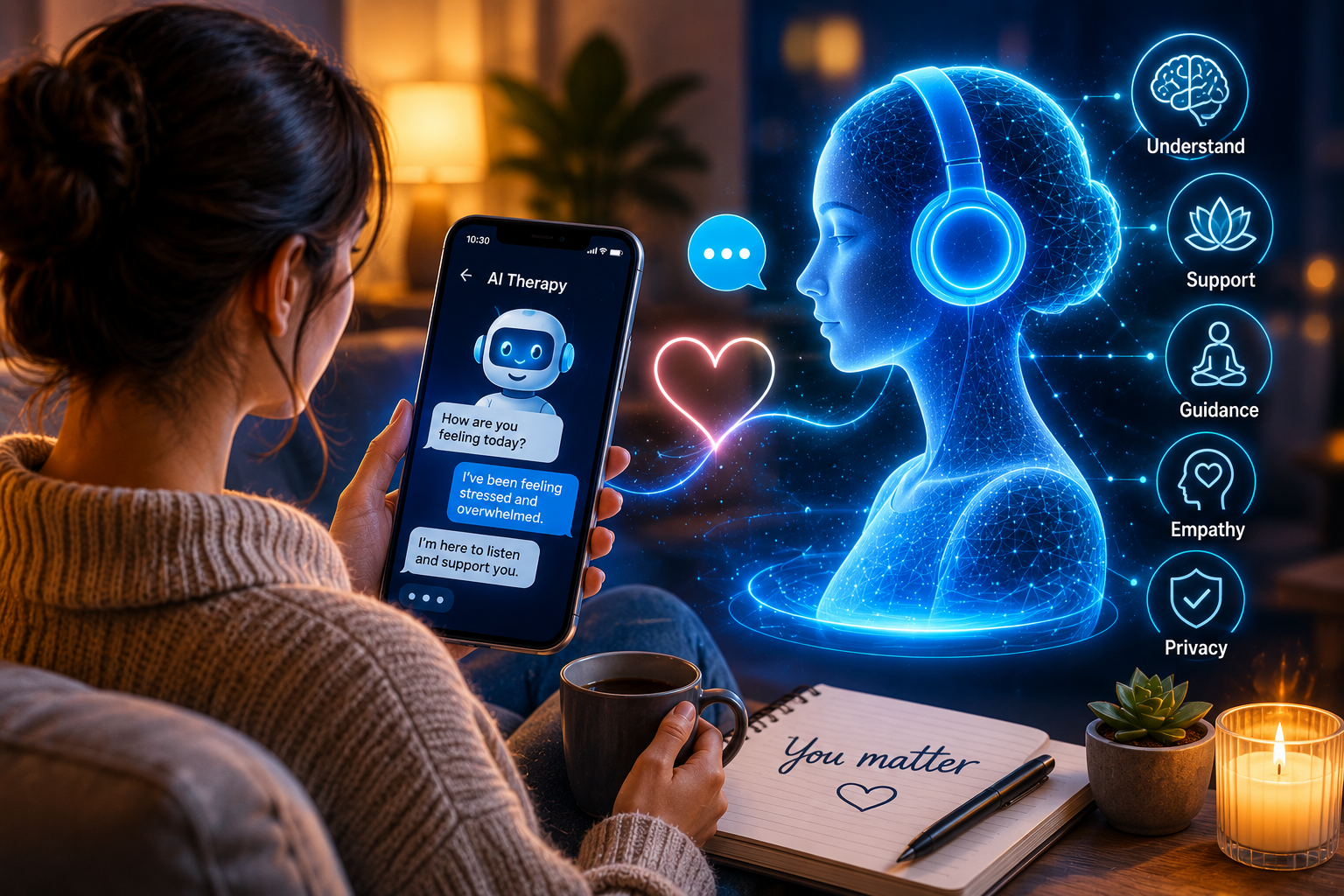
Introduction
AI therapist conversations have become more common in recent years, but access to professional support remains a challenge for many people.
Long waiting lists, high therapy costs, and busy schedules often prevent individuals from getting the help they need.
As a result, a growing number of people are turning to artificial intelligence for emotional support.
AI-powered chatbots and virtual companions are now being used to discuss stress, anxiety, relationships, and everyday challenges. This trend raises an important question:
Why are more people using AI as a personal therapist, and can it really help?
Let’s explore how AI therapy is changing mental health support in 2026.
What Is an AI Therapist?
An AI therapist is an artificial intelligence system designed to provide emotional support through conversation.
Unlike traditional chatbots, AI therapy tools can:
- Listen to personal concerns
- Offer coping strategies
- Guide self-reflection
- Provide mental wellness exercises
- Track emotional patterns
Popular AI mental health apps include:
- Woebot
- Wysa
- Replika
- Character AI wellness companions
These platforms use natural language processing to create conversations that feel more personal and supportive.
Why People Are Turning to AI for Emotional Support
1. Available Anytime
One of the biggest advantages of AI therapy is accessibility.
Unlike traditional therapy appointments, AI tools are available:
- 24 hours a day
- Seven days a week
- From anywhere with internet access
Many users appreciate having immediate support during stressful moments.
2. Lower Cost
Professional therapy can be expensive.
AI mental health tools often provide free or affordable alternatives, making emotional support more accessible to a wider audience.
3. No Fear of Judgment
Many people feel uncomfortable discussing personal struggles with others.
AI systems provide a private space where users can express thoughts without worrying about criticism or embarrassment.
4. Convenience
AI therapy apps can be used by the following:
- Smartphones
- Tablets
- Laptops
This flexibility fits easily into modern lifestyles.
What AI Therapy Can Help With
AI mental health tools may assist users with:
- Daily stress management
- Anxiety awareness
- Mood tracking
- Self-reflection
- Mindfulness exercises
- Building healthy habits
Many users report that regular conversations help them better understand their emotions.
The Benefits of AI as a Personal Therapist
Instant Support
Users do not need to wait days or weeks for an appointment.
Personalized Conversations
Modern AI systems can remember preferences and previous discussions to provide more relevant responses.
Encouraging Self-Awareness
Many AI therapy tools ask reflective questions that help users examine their thoughts and behaviors.
Consistent Availability
AI never gets tired, distracted, or unavailable due to scheduling conflicts.
The Limitations of AI Therapy
Despite its advantages, AI is not a replacement for licensed mental health professionals.
Lack of Human Empathy
AI can simulate empathy, but it doesn’t truly comprehend human emotion.
Limited Crisis Support
Serious mental health emergencies require professional intervention.
AI tools should never replace emergency mental health services.
Risk of Inaccurate Advice
AI systems can occasionally generate misleading or inappropriate responses.
Users should always verify important mental health guidance with qualified professionals.
Can AI Replace Human Therapists?
The short answer is no.
While AI can provide support and guidance, human therapists offer qualities that technology cannot fully replicate, including:
- Genuine empathy
- Professional clinical judgment
- Complex emotional understanding
- Personalized treatment plans
Most experts believe AI will complement therapy rather than replace it.
Privacy Concerns Around AI Therapy
As AI systems become more personal, privacy becomes increasingly important.
Users should consider:
- How conversations are stored
- What data is collected
- Whether information is used for training AI systems
- Platform privacy policies
Before sharing sensitive information, it is important to understand how the platform handles user data.
For more information about responsible AI development, visit Microsoft’s AI resource center:
https://www.microsoft.com/en-us/ai
The Future of AI Mental Health Support
The future of AI therapy will likely include:
- More personalized emotional support.
- Better memory and context awareness.
- Improved mental health monitoring.
- Integration with healthcare systems.
- Stronger privacy protections.
As AI technology evolves, digital mental wellness tools may become a regular part of everyday life.
Frequently Asked Questions
Is AI therapy effective?
AI therapy can help with stress management, self-reflection, and emotional support, but it is not a substitute for professional mental health care.
Is AI therapy safe?
Most AI therapy apps are designed to provide general support, but users should review privacy policies and avoid relying on AI during emergencies.
Can AI diagnose mental health conditions?
No. Only qualified healthcare professionals can diagnose mental health disorders.
Why do people prefer AI therapy?
Many users value its accessibility, affordability, privacy, and 24/7 availability.
Conclusion
The growing popularity of AI therapy reflects a larger shift in how people seek support in the digital age.
AI can provide convenient, affordable, and judgment-free conversations that help users manage everyday stress and emotional challenges.
However, it is important to remember that AI is a tool, not a replacement for human care.
The future of mental health support will likely combine the accessibility of AI with the expertise and empathy of trained professionals, creating a more balanced and accessible approach to emotional well-being.
Related Reading
AI Agent or AI Chatbot: What Do You Need in 2026?
https://rategears.com/ai-agent-or-ai-chatbot-what-do-you-need-in-2026/
Why Search Engines Are Turning Into Answer Engines in 2026
https://rategears.com/why-search-engines-are-turning-into-answer-engines-in-2026





Post Comment