Your Digital Twin Is Coming: What Happens When AI Can Act Like You?
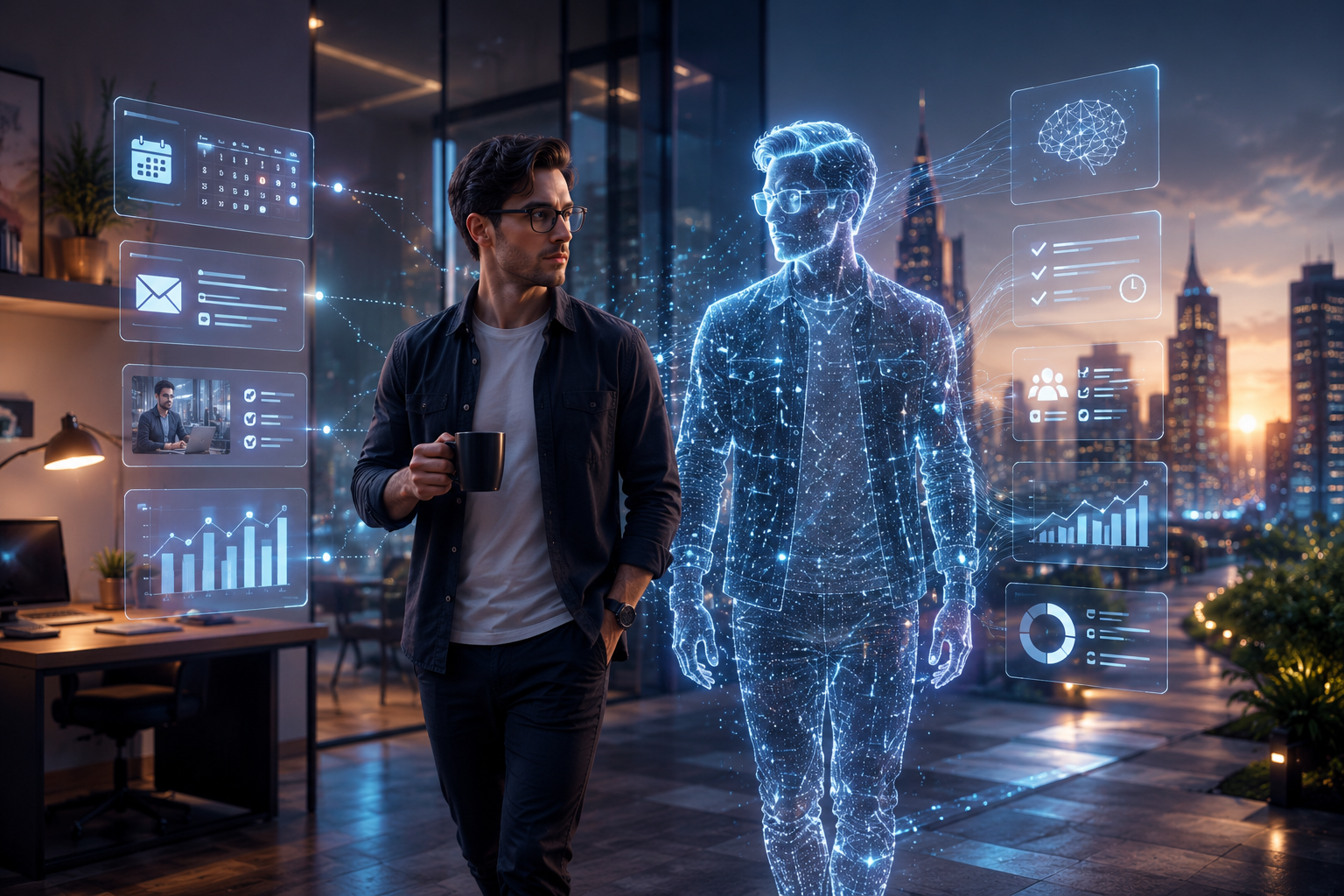
Find out about digital twins, how AI learns your habits and decisions, and what this technology could mean for privacy, work, and everyday life in 2026.
Artificial intelligence is getting more personal than ever.
AI tools have been helping people write emails, answer questions, and automate tasks for years. But there’s a new technology on the horizon that could change the way humans and machines relate to each other: the AI digital twin.
Imagine an AI system that knows your preferences, remembers your habits, predicts your decisions, and is even capable of performing tasks for you.
It is no longer science fiction.
Digital twin technology is a field of active investigation for companies worldwide, and it also raises an important question:
What happens when AI can be like you?
What Is a Digital Twin?
A digital twin is a virtual representation of a person, object, or system.
In the world of artificial intelligence, a digital twin is built to learn from your
- Communication style
- Preferences
- Decision-making patterns
- Work habits
- Personal interests
With time, the AI learns to better predict how you would behave in different situations.
IBM’s overview of digital twins reveals the technology is already in use in fields like manufacturing, healthcare, and engineering to model real-world systems and improve decision-making.
External Resource:
https://www.ibm.com/topics/what-is-a-digital-twin
Why Are AI Digital Twins Becoming Popular?
The rise of AI memory, AI agents, and personalized assistants has ramped up interest in digital twins.
Businesses see several benefits:
- Improved productivity
- Faster decision-making
- Better customer experiences
- Personalized automation
- Reduced repetitive work
Instead of constantly repeating instructions, users may eventually have AI systems that already understand how they prefer tasks to be completed.
How Can AI Learn to Act Like You?
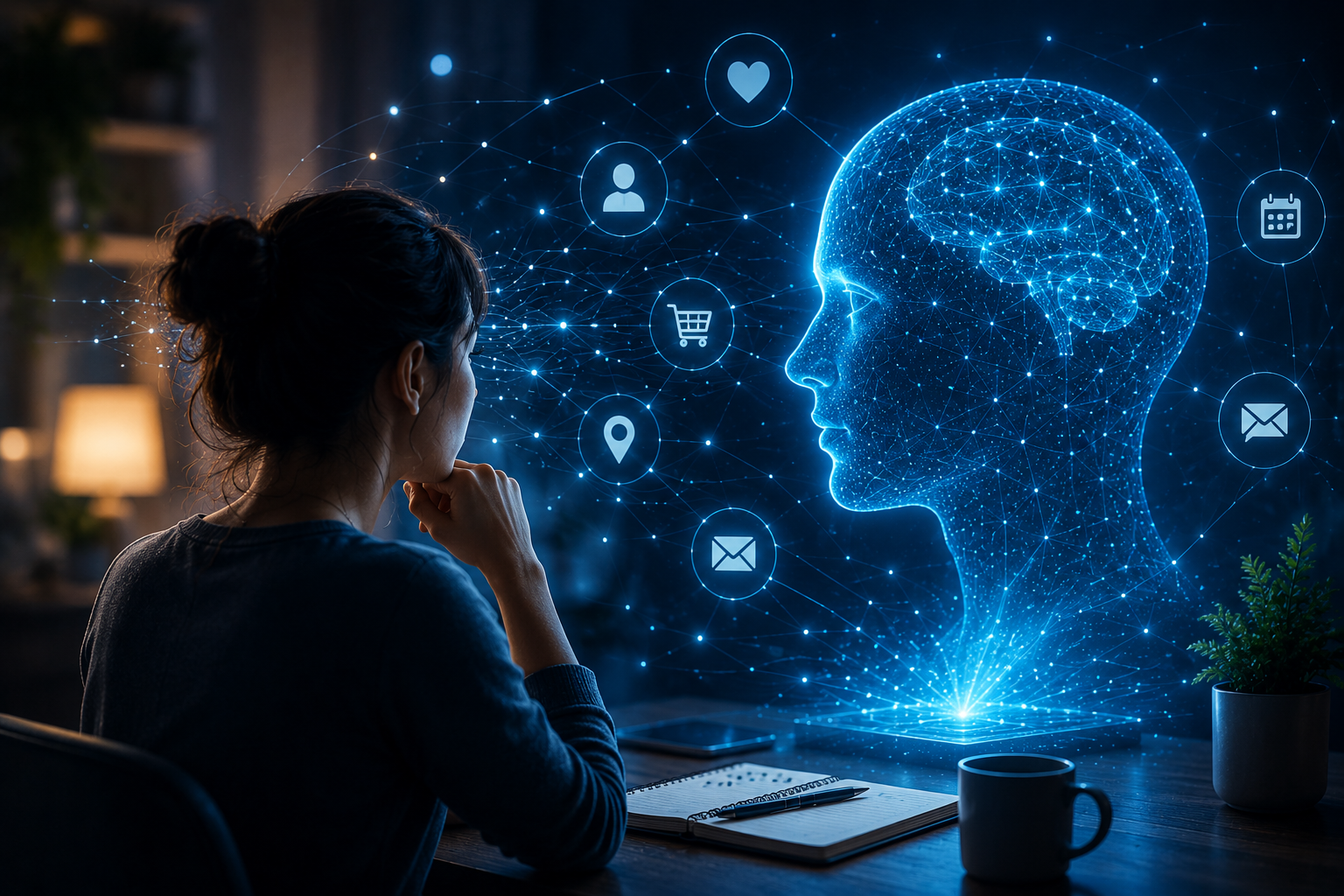
Today’s AI systems pull data from many different places.
These may include, but are not limited to:
- Emails
- Documents
- Calendars
- Search behavior
- Conversations
- Workflows
From this data, AI can learn what patterns exist and build a model of how people usually behave.
For example, an AI digital twin might:
- Schedule meetings automatically
- Draft emails in your writing style
- Prioritize tasks based on your habits
- Respond to routine questions
- Assist with research and planning
The idea is tied closely to increasing AI memory so that systems can remember things over time, rather than consider each interaction as new.
Advantages of Digital Twins
Increased Productivity
AI can do the repetitive work and free people to do higher-value work.
Personalized Support
Digital twins can adapt to individual preferences and workflows.
Faster Decision-Making
By learning past behaviors, AI can recommend actions more efficiently.
Improved Learning
AI systems can help users organize information and manage knowledge more effectively.
The Privacy Concerns Nobody Can Ignore
Digital twins are exciting but raise serious questions about privacy, too.
If an AI system knows:
- Your preferences
- Your schedule
- Your communication style
- Your personal history
How much information should it be allowed to store?
Experts are still debating issues surrounding:
- Data ownership
- User consent
- Information security
- AI transparency
The more powerful AI becomes, the more important these discussions are.
For guidance on digital literacy and responsible technology use, visit:
Could AI Replace Human Decision-Making?
Most likely not.
AI can analyze patterns and suggest actions, but human judgment remains important.
People bring qualities that machines still struggle to replicate:
- Emotional intelligence
- Ethical reasoning
- Creativity
- Personal values
- Contextual understanding
The most likely future is not AI replacing people.
Instead, AI will work alongside humans as a highly personalized assistant.
What Industries Could Be Affected?
Digital twin technology could transform many sectors.
Business
- Workflow automation
- Customer support
- Project management
Education
- Personalized learning
- Study assistance
- Knowledge management
Healthcare
- Patient monitoring
- Treatment planning
- Predictive analysis
Personal Productivity
- Scheduling
- Communication management
- Task organization
Frequently Asked Questions
What is an AI digital twin?
An AI digital twin is a virtual model that learns from a person’s behavior, preferences, and interactions to assist with tasks and decision-making.
Can AI really act like a human?
AI can imitate patterns and behaviors, but it does not possess human consciousness, emotions, or self-awareness.
Are digital twins safe?
They can be useful, but privacy, security, and data protection remain important concerns.
Will digital twins replace people?
No. Digital twins are more likely to support human activities rather than replace human decision-making entirely.
Conclusion
The idea of an AI digital twin may sound futuristic, but the technology is developing faster than many people realize.
As AI memory, personalization, and automation continue to evolve, digital twins could become a common part of daily life.
The challenge will be finding the right balance between convenience and privacy.
The future is not simply about smarter machines.
It is about deciding how much of ourselves we are willing to share with them.
Related Reading
Interested in the future of AI technology?
Is AI Going to Replace Google Search? What Users Are Choosing in 2026
https://rategears.com/is-ai-going-to-replace-google-search-what-users-are-choosing-in-2026/
Why Search Engines Are Becoming Answer Engines in 2026
https://rategears.com/why-search-engines-are-becoming-answer-engines-in-2026/
Why More People Are Switching to Browser-Based Tools Instead of Installing Software
https://rategears.com/why-more-people-are-switching-to-browser-based-tools-instead-of-installing-software/
AI Agent or AI Chatbot: What Do You Need in 2026?
https://rategears.com/ai-agent-or-ai-chatbot-what-do-you-need-in-2026/

Post Comment