Social Media Trust: How Social Media Changed Who We Trust
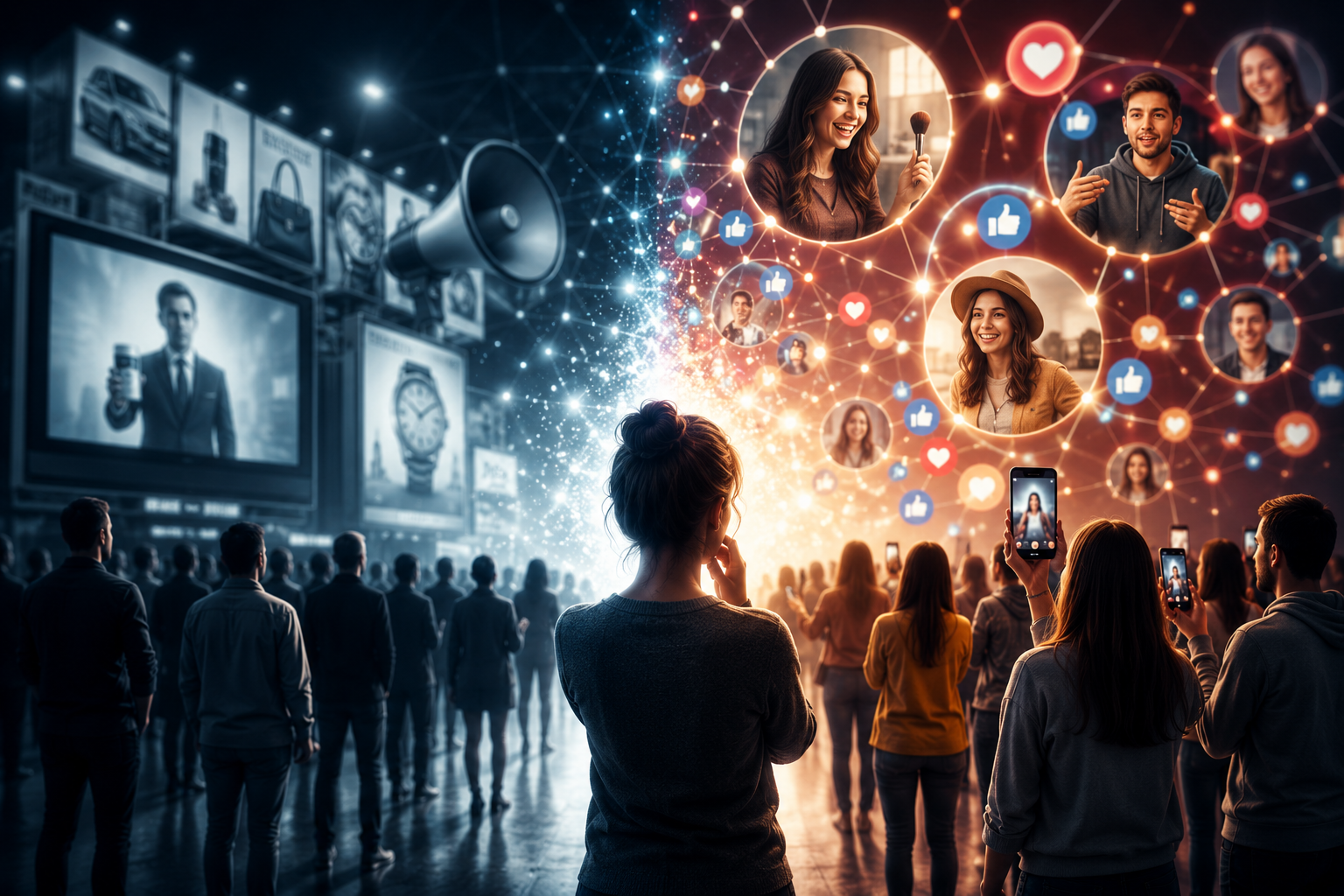
Twenty years ago, people trusted television advertisements, newspaper recommendations, and celebrity endorsements.
Today, many people trust a creator with 10,000 followers more than a multinational corporation spending millions on advertising.
This change did not happen overnight.
Social media has completely transformed how people discover information, make purchasing decisions, and decide whom to trust. Platforms such as Instagram, YouTube, TikTok, LinkedIn, and X have shifted influence away from large institutions and placed it into the hands of individuals.
The result is a major change in human behavior.
We are no longer living in a world where brands control the conversation. We are living in a world where trust is built through people.
The Traditional Era of Trust
Before social media, trust flowed through institutions.
People relied on:
- Television commercials
- Newspapers
- Radio stations
- Celebrities
- Large corporations
Brands had significant control over public perception because they controlled most communication channels.
If a company wanted attention, it bought advertising space.
Consumers had limited opportunities to challenge claims or compare experiences with others.
As a result, traditional advertising became one of the most powerful tools for influencing purchasing decisions.
The Rise of Social Media
Social media changed everything.
For the first time, ordinary people gained access to global audiences.
Anyone could share:
- Reviews
- Experiences
- Opinions
- Tutorials
- Recommendations
This created a new source of trust.
Instead of listening only to brands, people started listening to other people.
A customer review became more valuable than a polished advertisement.
A creator’s recommendation often carried more weight than a celebrity endorsement.
This marked the beginning of a major shift in social media trust.
Why People Trust Creators More Than Brands
Authenticity Feels More Human
Most advertisements are carefully planned and designed to sell.
Creators, on the other hand, often share personal experiences.
Whether reviewing a product, discussing a challenge, or sharing daily life, creators appear more relatable.
People naturally trust individuals they can connect with emotionally.
Transparency Creates Credibility
Many creators openly discuss both strengths and weaknesses.
Unlike traditional advertisements, which focus only on positives, creators often show imperfections.
This honesty builds credibility.
Consistency Builds Relationships
People may see a brand advertisement once.
They may watch a creator every day.
Over time, repeated exposure creates familiarity.
Familiarity often develops into trust.
The Psychology Behind Social Media Trust
Trust is deeply connected to psychology.
Research suggests that humans are influenced by social proof.
Social proof occurs when people look at others to determine what they should believe or do.
Examples include:
- Product reviews
- Comments
- Ratings
- Testimonials
- Recommendations
When thousands of people support a creator or community, others often perceive that creator as trustworthy.
This is one reason influencer marketing has become so effective.
External Resource: Google’s Consumer Insights:
https://www.thinkwithgoogle.com
How Influencers Changed Consumer Behavior
Influencers have become powerful decision-makers in the digital economy.
Today, consumers frequently discover products through:
- Instagram reels
- TikTok videos
- YouTube reviews
- LinkedIn posts
Many purchasing decisions now begin with a recommendation rather than a traditional advertisement.
According to industry research, consumers often trust recommendations from people they follow more than messages directly from brands.
This has encouraged companies to invest heavily in influencer marketing.
The Creator Economy and the New Trust Model
The creator economy has grown rapidly because trust has become decentralized.
Influence is no longer limited to celebrities.
Today:
- A fitness coach can influence buying decisions.
- A student can build a professional audience.
- A technology reviewer can shape consumer preferences.
- A freelancer can attract clients through expertise.
People no longer need fame to have influence.
They need credibility.
This shift explains why personal branding has become increasingly important.
Online Communities Are Becoming More Influential
Another major change involves communities.
People increasingly trust:
- Reddit discussions
- Facebook groups
- Discord communities
- LinkedIn networks
Consumers often search for real experiences before making decisions.
They want answers from people who have already used a product or service.
This community-driven trust model continues to grow.
The Benefits of This Shift
More Transparency
Brands can no longer fully control their reputation.
Consumers share experiences openly.
More Informed Decisions
People can access reviews, comparisons, and expert opinions instantly.
Greater Opportunities for Individuals
Creators and professionals can build authority without needing traditional media exposure.
The Risks of Trusting Social Media
While social media trust has many benefits, it also creates challenges.
Misinformation
Not all creators are experts.
Some content may be inaccurate or misleading.
Paid Promotions
Sponsored content can blur the line between genuine recommendations and advertising.
Echo Chambers
People often follow voices they already agree with.
This can limit exposure to different perspectives.
Because of these risks, critical thinking remains essential.
How to Decide Who Deserves Your Trust
When evaluating information online:
Check Multiple Sources
Avoid relying on a single creator or platform.
Look for Evidence
Trust claims supported by data, research, and real-world examples.
Understand Incentives
Ask whether someone benefits financially from a recommendation.
Value Expertise
Followers do not always equal credibility.
Knowledge and experience matter.
What the Future of Trust Looks Like
As technology evolves, trust will continue shifting toward individuals and communities.
Artificial intelligence may generate content faster than ever, but authenticity will likely become even more valuable.
People are increasingly looking for:
- Genuine experiences
- Real expertise
- Transparent communication
The future belongs not necessarily to the loudest voices but to the most trusted ones.
Final Thoughts
Social media has changed far more than marketing.
It has changed how people decide what to believe, who to follow, and where to place their trust.
The era of institutions controlling influence is fading.
In its place, a new system has emerged one built on creators, communities, relationships, and shared experiences.
Whether this change is entirely positive or not remains open for debate.
But one thing is clear:
Trust is no longer owned by brands.
It is earned by people.
Related Articles
Everyone Is a Brand Now: The New Reality of the Internet
Creating Content Has Become a Lifestyle — But Are We Still Living in the Moment?
Digital Stimulation and the Death of Boredom
Ad Fatigue in 2026: Why It Feels Like Every Platform Is Selling You Something


Post Comment