Programming the Mind: AI, Illusion, and Educating for Truth in 2026
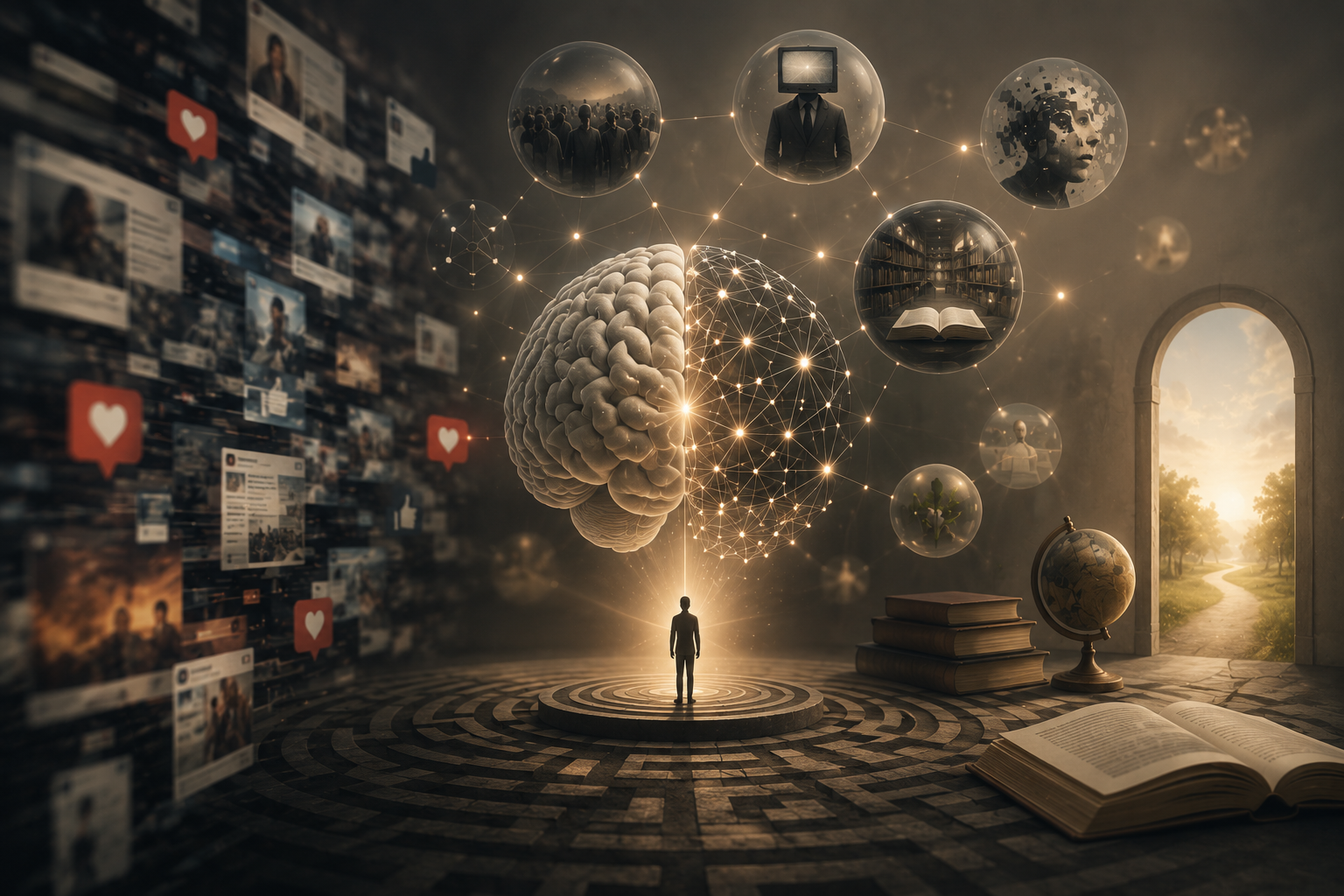
How does AI influence our thinking? Find out how artificial intelligence, misinformation, digital illusions, and education for truth connect in 2026.
Artificial intelligence is changing the way people learn, search, communicate, and decide.
Every day, millions of people use AI tools, social media, and recommendation algorithms to find information.
But there’s an important question we rarely ask:
Who influences the way we think?
Understanding the relationship between technology, perception, and truth is becoming one of the most important skills of the digital age as AI gets more powerful.
What Does “Programming the Mind” Mean?
Programming the mind does not mean directly controlling people.
Rather, it refers to the way information, algorithms, media content, and AI systems shape our beliefs, opinions, and decisions.
The following is where most of what we know today comes from:
- Social media feeds
- Search engines
- AI assistants
- News platforms
- Video recommendations
These systems help us discover information, but they also shape what we see and what we ignore.
How AI Influences Human Thinking
Artificial intelligence is designed to recommend relevant content based on user behavior.
This creates a personalized experience, but it can also create blind spots.
AI systems can affect:
- What information appears first
- Which opinions receive more visibility
- How news spreads online
- What content do users engage with most
Over time, these patterns can affect how people understand reality.
Learn more about responsible AI from Google’s AI Principles:
https://ai.google/responsibility/principles
The Rise of Digital Illusions
The internet provides unlimited access to information.
However, more information does not always mean a better understanding.
Some common digital illusions include:
Information Overload
When people consume too much information, it becomes difficult to identify what is truly important.
Echo Chambers
Algorithms often recommend content that matches existing beliefs.
As a result, users may rarely encounter different perspectives.
AI-Generated Content
AI can create:
- Articles
- Images
- Videos
- Voice recordings
While useful, these technologies can sometimes blur the line between reality and fiction.
Why Educating for Truth Matters
In the older generations, education was all about rote learning.
Today, information is more accessible than ever.
The question isn’t what information I can find.
The problem is how to judge information.
Modern education should teach the following:
- Critical thinking
- Media literacy
- Digital responsibility
- Fact-checking skills
- Ethical use of AI
These skills allow people to navigate an increasingly complex digital world.
Skills for the AI Age
As AI gets more integrated into everyday life, some skills are becoming more valuable.
1. Thinking Critically
Question information instead of accepting it immediately.
2. Source Verification
Verify the source of information before sharing it.
3. Digital Literacy
Algorithms affect your online experience. Find out how.
4. Ethical Decision-Making
Use technology wisely and thoughtfully.
5. Independent Thinking
Develop the ability to form opinions based on evidence rather than trends.
Can AI Help Us Find the Truth?
The answer is both yes and no.
AI can:
- Summarize information quickly
- Assist with research
- Improve productivity
- Help users learn new topics
However, AI can also:
- Make mistakes
- Generate inaccurate information
- Reflect biases in training data
This is why human judgment remains essential.
The Future of Education in an AI World
The future of education will not simply focus on teaching facts.
It will focus on teaching people how to think.
Future classrooms may place greater emphasis on:
- Problem-solving
- Discernment
- Digital literacy
- Ethical technology use
- Critical analysis
In an age of AI-generated content, the ability to separate truth from illusion may become one of the most valuable human skills.
Frequently Asked Questions
What does programming the mind mean?
Programming the mind refers to how information, media, algorithms, and AI systems influence beliefs, decisions, and perceptions over time.
How does AI affect critical thinking?
AI can improve access to information, but users still need critical thinking skills to evaluate accuracy and credibility.
Why is educating for truth important?
Educating for truth helps individuals identify misinformation, think independently, and make informed decisions in a digital world.
Conclusion
Artificial intelligence is changing the way humans interact with information.
While AI offers incredible opportunities for learning and productivity, it also creates new challenges related to misinformation, bias, and digital influence.
The future will belong not only to those who understand technology but also to those who can think critically, question information, and seek truth in a world filled with digital noise.
As AI continues to evolve, educating for truth may become one of the most important responsibilities of modern society.
Further reading:
Interested in the future of AI technology?
What Happens When Your AI Knows More About You Than Google Does?
https://rategears.com/what-happens-when-your-ai-knows-more-about-you-than-google-does/
Why Search Engines Are Becoming Answer Engines in 2026
https://rategears.com/why-search-engines-are-becoming-answer-engines-in-2026/
AI Agent or AI Chatbot: What Do You Need in 2026?
https://rategears.com/ai-agent-or-ai-chatbot-what-do-you-need-in-2026/




Post Comment