AI Clone: Why Everyone Is Building an AI Version of Themselves
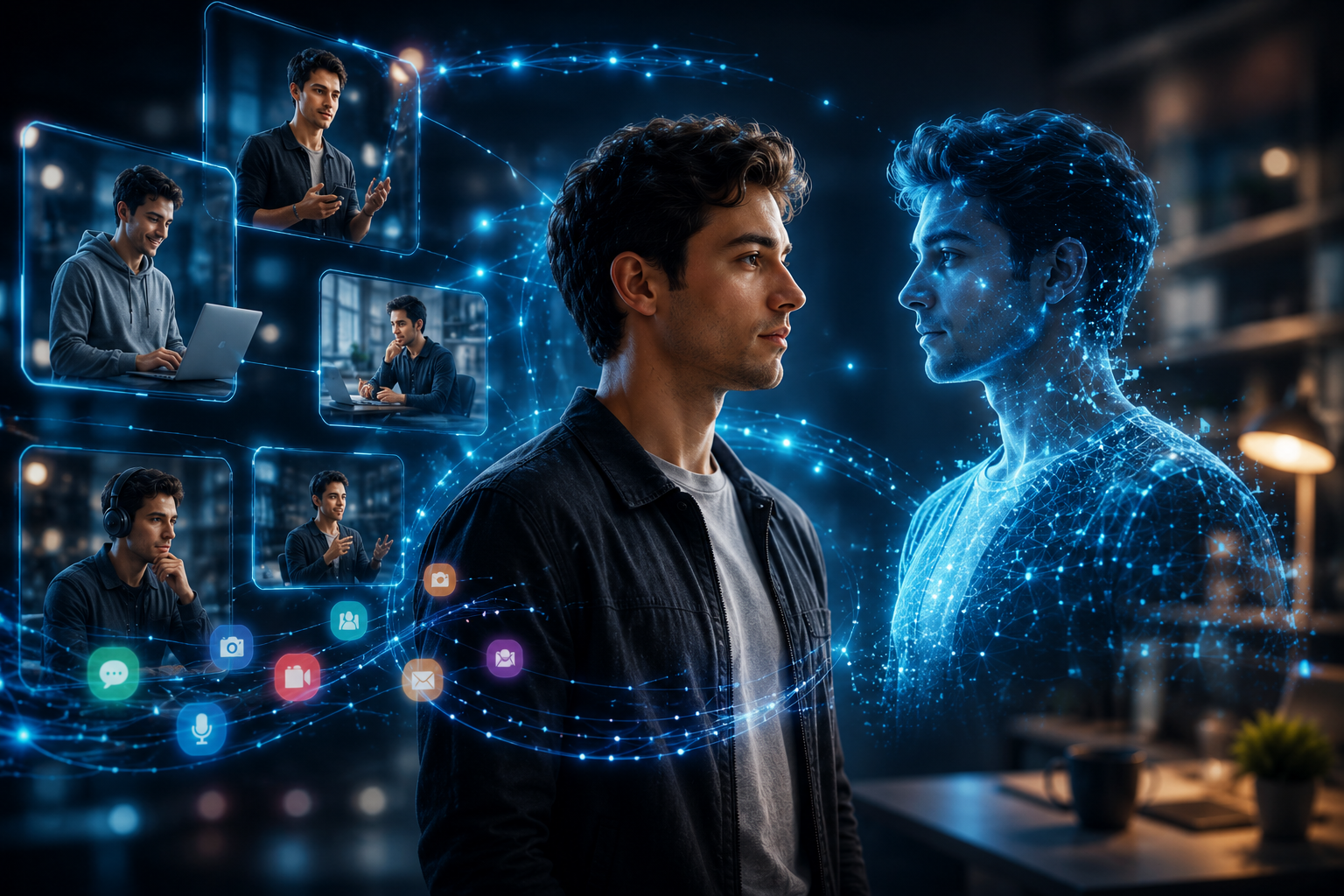
A few years ago, the idea of creating a digital version of yourself sounded like science fiction.
Today, it is becoming a reality.
Creators are building AI versions of themselves that can answer questions. Entrepreneurs are training AI assistants on their knowledge. Influencers are creating AI avatars that interact with followers even when they are offline.
The rise of the AI clone is one of the most fascinating technology trends of 2026.
The goal is simple: allow people to scale their knowledge, communication, and presence without being available 24 hours a day.
But this trend also raises important questions.
If an AI can think, speak, and respond like you, where does the real person end and the digital version begin?
What Is an AI Clone?
An AI clone is a digital version of a person created using artificial intelligence.
It is typically trained using information such as:
- Voice recordings
- Videos
- Emails
- Documents
- Social media content
- Personal knowledge
The AI learns communication patterns, preferences, and expertise to simulate how a person might respond.
Unlike traditional chatbots, an AI clone is designed to reflect a specific individual.
The goal is not simply to provide information.
The goal is to provide information in a way that feels like interacting with that person.
Why Are People Building AI Clones?
The biggest reason is scalability.
There is only one version of a human being.
There can be thousands of versions of an AI clone.
Saving Time
Professionals spend hours answering similar questions.
An AI clone can handle common requests automatically.
For example:
- Customer inquiries
- Frequently asked questions
- Appointment information
- Educational content
This allows people to focus on higher-value work.
Preserving Knowledge
Many experts possess years of experience and specialized knowledge.
An AI clone can capture and organize that knowledge.
Future employees, students, or customers can access it instantly.
Expanding Reach
Creators and influencers often struggle to interact with large audiences.
AI clones make it possible to engage with followers at scale.
A creator with one million followers cannot personally answer every message.
An AI version can help bridge that gap.
The Rise of AI Avatars
AI avatars are becoming increasingly popular across social media and business platforms.
Unlike text-based AI systems, avatars add a visual layer to communication.
They can:
- Speak naturally
- Present information
- Conduct training sessions
- Deliver customer support
- Create personalized experiences
Companies such as Synthesia have demonstrated how AI avatars can generate realistic video presentations without requiring a human to appear on camera every time.
External Resource:
https://www.synthesia.io
This technology is changing how businesses create content and communicate with audiences.
AI Influencers Are Already Here
One of the most surprising developments is the growth of AI influencers.
These are digital personalities created entirely through artificial intelligence.
Some AI influencers have:
- Millions of followers
- Brand partnerships
- Sponsored campaigns
- Global audiences
Many users interact with them just as they would with human creators.
The success of AI influencers highlights an important shift.
People are increasingly willing to build relationships with digital personalities.
AI Clones and Personal Branding
The creator economy has made personal branding more important than ever.
Many professionals are now exploring AI clones as a way to extend their brand.
Imagine:
- A consultant available 24/7
- A teacher answering student questions anytime
- A founder sharing business insights automatically
Instead of replacing personal branding, AI clones may strengthen it.
How Businesses Are Using AI Clones
Businesses are beginning to see practical benefits from AI clone technology.
Customer Support
AI clones can provide responses based on company knowledge.
Employee Training
Organizations can create AI versions of experienced employees to help train new staff.
Sales Assistance
AI-powered representatives can guide customers through products and services.
Knowledge Management
Important expertise can remain accessible even when employees move on.
This makes AI clones valuable tools for preserving organizational knowledge.
The Benefits of AI Clones
Increased Productivity
Routine communication can be automated.
Better Accessibility
Information becomes available around the clock.
Consistent Communication
Responses remain aligned with established knowledge and expertise.
Global Reach
AI systems can communicate with users across different time zones and languages.
The Risks and Ethical Questions
Despite the benefits, AI Clone technology raises important concerns.
Privacy Issues
Training an AI clone requires large amounts of personal information.
Users must understand how this data is collected and stored.
Misrepresentation
What happens if an AI clone says something the real person would never say?
This creates challenges around accountability.
Deepfakes and Manipulation
AI-generated voices and avatars can potentially be misused.
Responsible development and regulation are essential.
External Resource:
https://www.weforum.org
The World Economic Forum has highlighted the growing importance of AI governance and ethical standards as these technologies evolve.
Could AI Clones Replace Human Interaction?
Probably not.
People still value genuine human relationships.
An AI clone can answer questions and provide information.
It cannot fully replace:
- Human emotions
- Real experiences
- Authentic relationships
- Personal judgment
The most successful use of AI clones will likely involve collaboration rather than replacement.
They will act as assistants, not substitutes.
What the Future Looks Like
AI clone technology is still in its early stages.
Over the next few years, we may see the following:
- More realistic AI avatars
- Personalized AI assistants
- Digital versions of professionals
- AI-powered business representatives
- Enhanced knowledge-sharing systems
Eventually, many people may have an AI version of themselves available online.
Just as websites and social media profiles became normal, AI clones could become a standard part of digital identity.
Frequently Asked Questions
What is an AI clone?
An AI clone is a digital version of a person trained using artificial intelligence to mimic their communication style, knowledge, and behavior.
How are AI clones created?
AI clones are typically built using personal data such as voice recordings, written content, videos, and conversations.
Are AI clones replacing humans?
No. Most AI clones are designed to assist people by automating communication and sharing information, not replacing human relationships.
Can businesses use AI clones?
Yes. Businesses use AI clones for customer support, employee training, knowledge management, and sales assistance.
Are AI clones safe?
They can be useful when developed responsibly, but privacy, security, and ethical concerns remain important considerations.
Final Thoughts
The rise of the AI clone represents a major shift in how people interact with technology.
For creators, it offers a way to engage larger audiences.
For professionals, it helps preserve expertise.
For businesses, it improves efficiency and accessibility.
At the same time, it challenges traditional ideas about identity, authenticity, and human connection.
The question is no longer whether AI clones will become more common.
The real question is how society will choose to use them.
One thing is clear:
The future may include a digital version of you working alongside the real one.
Related Readings
Everyone Is a Brand Now: The New Reality of the Internet
AI Wearables in 2026: The Gadgets Becoming Your Second Brain
Social Media Trust: Why People Trust Creators More Than Brands



Post Comment