Human Voice vs AI Voice: What Sounds More Real Today?
Introduction
A few years ago, it was easy to tell whether a voice came from a person or a machine.
Today, that distinction is becoming increasingly difficult.
Artificial intelligence has advanced rapidly, and modern AI voice technology can now generate speech that sounds surprisingly natural. From virtual assistants and audiobooks to customer support and content creation, AI-generated voices are becoming part of everyday life.
This raises an important question:
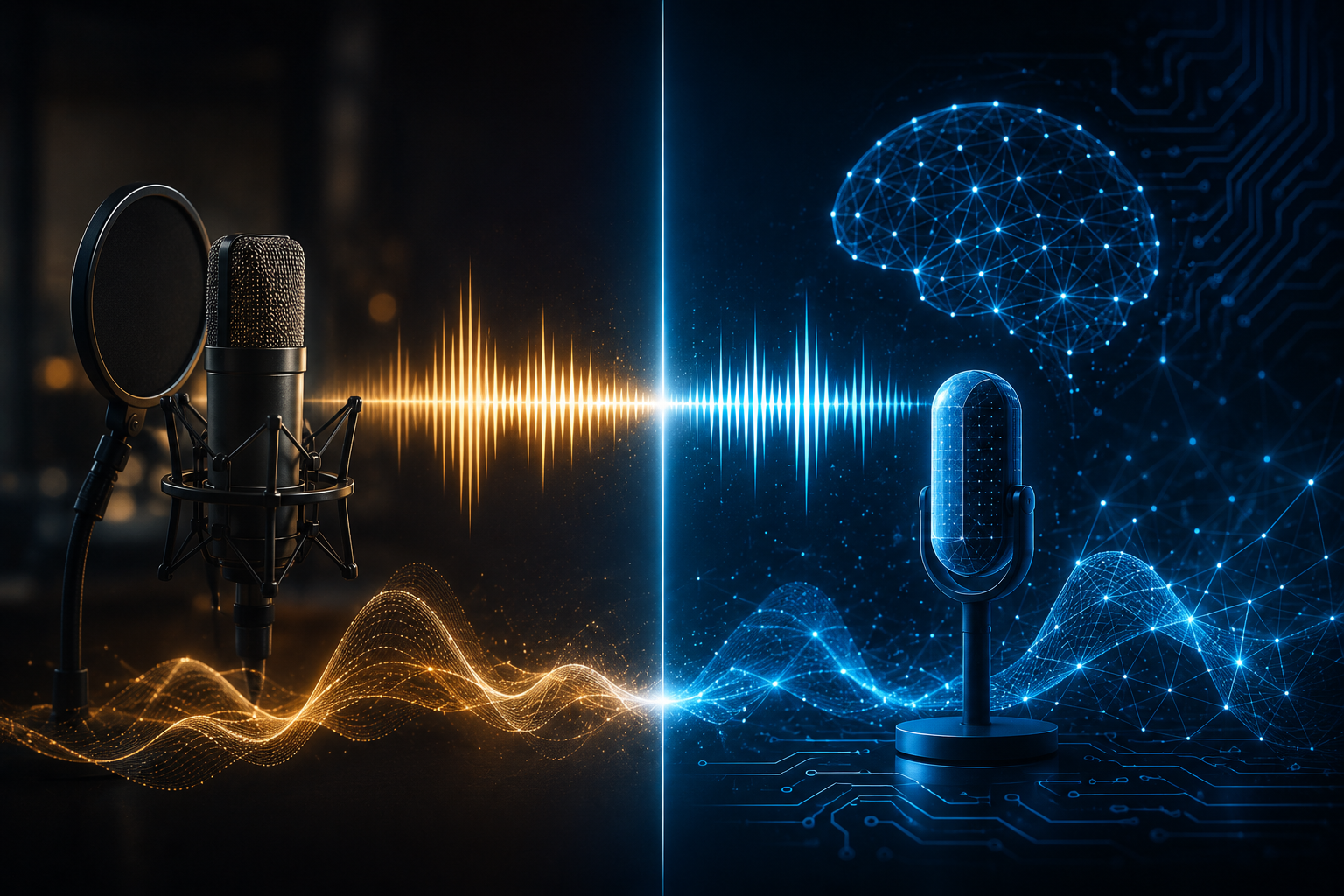
Human Voice vs AI Voice: What sounds more real today?
The answer is more complex than you might think.
What Is an AI Voice?
An AI voice is a synthetic voice created using artificial intelligence and speech synthesis technology.
Modern AI voice generators can:
- Convert text into natural speech
- Mimic emotions and tone
- Replicate accents and speaking styles
- Generate speech in multiple languages
- Clone voices from short audio samples
Popular AI voice platforms include:
- ElevenLabs
- OpenAI Voice
- Google AI Voice
- Microsoft Azure Speech
Unlike traditional robotic text-to-speech systems, today’s AI voices are designed to sound more human and conversational.
What Makes Human Voices Unique?
Human voices are shaped by more than words.
Every person has a unique combination of:
- Emotion
- Experience
- Personality
- Natural imperfections
- Spontaneous reactions
These elements create authenticity that listeners instinctively recognize.
A human voice can communicate excitement, empathy, humor, and vulnerability in ways that are difficult to fully replicate.
Human Voice vs AI Voice: Key Differences
| Feature | AI Voice | Human Voice |
| Availability | 24/7 | Limited |
| Consistency | Very High | Varies |
| Cost | Lower | Higher |
| Emotion | Simulated | Genuine |
| Creativity | Limited | Natural |
| Trust Factor | Growing | Strong |
| Scalability | Unlimited | Limited |
The biggest difference is simple:
AI voices can imitate emotion, but human voices experience it.
Why AI Voices Are Becoming Popular
AI-generated voices offer several advantages that make them attractive to businesses and creators.
Cost Efficiency
Hiring voice actors for every project can be expensive.
AI voice tools allow organizations to create professional-quality audio at a fraction of the cost.
Faster Content Production
AI can generate hours of speech within minutes.
This helps creators produce:
- Podcasts
- YouTube videos
- Audiobooks
- Training materials
more efficiently.
Global Accessibility
AI voice technology supports multiple languages and accents, making content accessible to wider audiences.
Where Human Voices Still Have the Advantage
Despite impressive advancements, human voices continue to outperform AI in several areas.
Emotional Storytelling
People naturally connect with genuine emotions.
Whether it’s a motivational speech, movie performance, or personal story, human voices often create deeper emotional engagement.
Trust and Authenticity
Many listeners still trust human voices more when discussing sensitive topics such as the following:
- Healthcare
- Education
- Financial advice
- Personal experiences
Live Conversations
Humans can adapt instantly during conversations.
They understand context, humor, emotions, and unexpected situations more naturally than AI systems.
Can Most People Tell the Difference?
The answer depends on the quality of the AI voice.
In many cases, modern AI voices sound realistic enough that casual listeners cannot immediately distinguish them from human recordings.
However, certain clues may reveal synthetic speech:
- Repetitive speech patterns
- Overly perfect pronunciation
- Unnatural pauses
- Limited emotional variation
As AI technology continues improving, these differences are becoming harder to detect.
The Rise of Voice Cloning
One of the most significant developments in 2026 is AI voice cloning.
Voice cloning technology allows AI systems to replicate a person’s voice using only a small audio sample.
Potential benefits include the following:
- Personalized digital assistants
- Accessibility solutions
- Media production
- Language translation
However, voice cloning also raises concerns about the following:
- Privacy
- Identity theft
- Fraud
- Deepfake scams
AI Voice and Deepfake Risks
As AI-generated speech becomes more realistic, misuse becomes a growing concern.
Criminals have already used AI voices for the following:
- Phone scams
- Impersonation attempts
- Fraudulent requests
- Fake audio recordings
This has increased demand for voice authentication and digital verification systems.
For more information about responsible AI development and security practices, visit Microsoft’s official AI platform:
https://www.microsoft.com/en-us/ai
The Future of Voice Technology
The future is unlikely to be AI replacing human voices completely.
Instead, we will likely see collaboration between both.
Future developments may include:
- More realistic AI-generated speech.
- Improved voice authentication systems.
- Better transparency around synthetic media.
- Hybrid human-AI communication tools.
AI voices will continue handling repetitive and scalable tasks, while human voices remain valuable for authenticity and emotional connection.
Frequently Asked Questions
Can AI voices sound completely human?
Modern AI voices are extremely realistic, but subtle differences in emotion and spontaneity still exist.
Are AI voices replacing voice actors?
Not entirely. AI is automating certain tasks, but human voice actors remain essential for storytelling, entertainment, and emotionally driven content.
What is voice cloning?
Voice cloning is the process of using AI to recreate a person’s voice based on recorded audio samples.
Is AI voice technology safe?
AI voice technology can be beneficial, but users should remain aware of privacy risks and potential misuse.
Conclusion
The debate between human and AI voices is becoming more relevant as artificial intelligence continues to advance.
AI voices offer speed, consistency, scalability, and affordability. Human voices provide authenticity, emotion, creativity, and trust.
Rather than replacing one another, both technologies are likely to coexist and complement each other.
The real question is no longer whether AI can sound human.
The question is whether listeners will continue to value the uniquely human qualities that no algorithm can fully replicate.
Related Reading
Is AI Going to Replace Google Search? What Users Are Choosing in 2026
https://rategears.com/is-ai-going-to-replace-google-search-what-users-are-choosing-in-2026/
Why Search Engines Are Becoming Answer Engines in 2026
https://rategears.com/why-search-engines-are-becoming-answer-engines-in-2026/
Why More People Are Switching to Browser-Based Tools Instead of Installing Software
https://rategears.com/why-more-people-are-switching-to-browser-based-tools-instead-of-installing-software/
AI Agent or AI Chatbot: What Do You Need in 2026?
https://rategears.com/ai-agent-or-ai-chatbot-what-do-you-need-in-2026/




Post Comment