Ad Fatigue in 2026: Why It Feels Like Every Platform Is Selling You Something
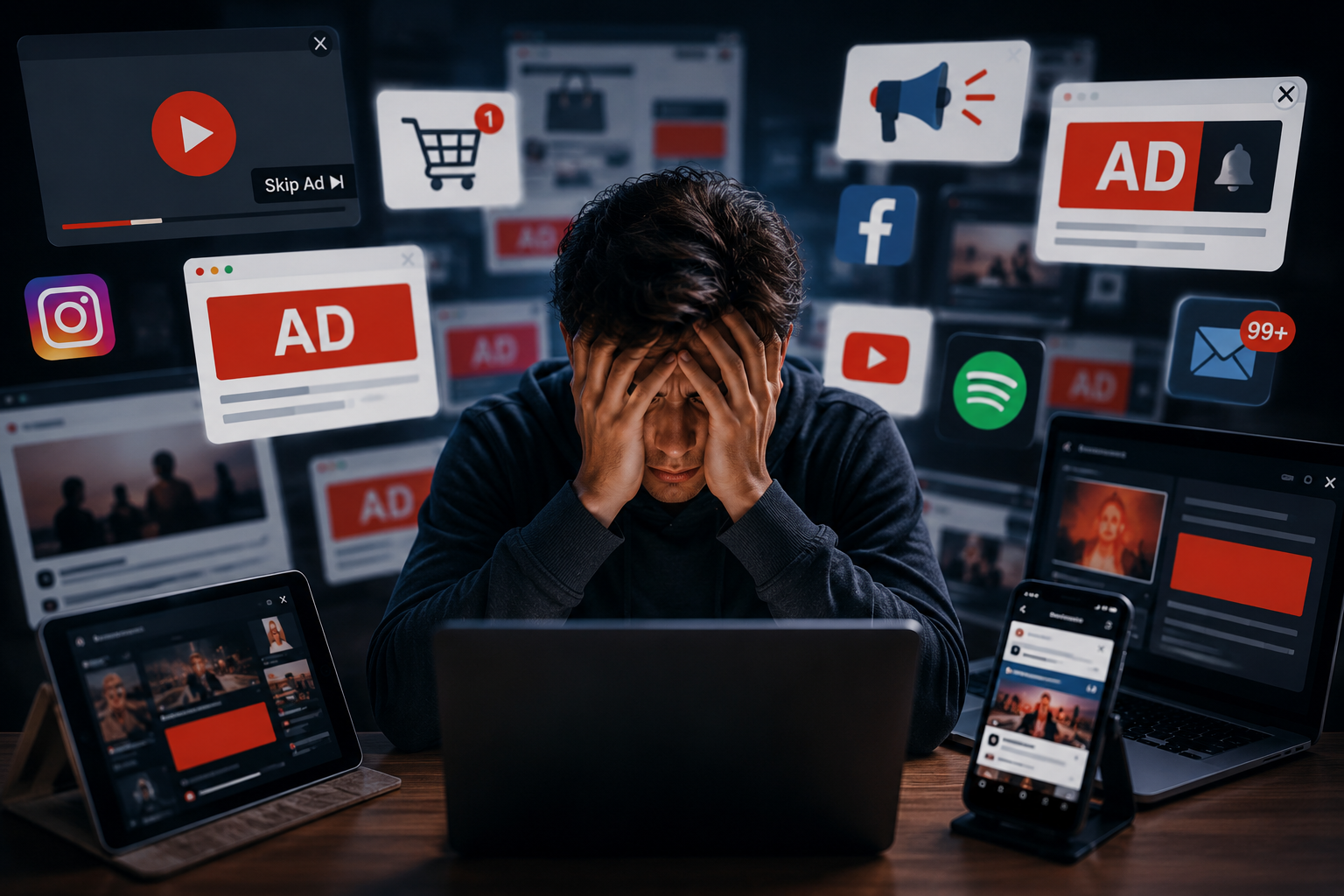
Open YouTube, and you’ll see an ad before your video starts.
Scroll through Instagram, and every few posts are sponsored.
You listen to Spotify, and an advertisement interrupts your music.
Browse Facebook, watch a reel, read an article, or even use a productivity app, and chances are you’ll encounter advertising.
For many users, this has become a daily frustration.
The internet was once seen as a place for information, entertainment, and connection. Today, it often feels like a marketplace where every click, scroll, and pause is an opportunity to sell something.
This growing frustration has a name: ad fatigue.
As digital advertising continues to expand across platforms, many users are asking an important question:
Are companies simply trying to earn more money, or has advertising become necessary to keep digital services running?
The answer lies somewhere in between.
What Is Ad Fatigue?
Ad fatigue happens when users become overwhelmed by seeing too many advertisements repeatedly.
At first, ads may capture attention.
Over time, however, users start ignoring them, feeling annoyed by them, or actively trying to avoid them.
This phenomenon affects both consumers and businesses.
For users, excessive advertising creates frustration.
For brands, ad fatigue reduces engagement because people stop paying attention altogether.
In simple terms, when everything becomes an advertisement, nothing stands out anymore.
Why Are Ads Everywhere Today?
The reason is surprisingly simple:
Most digital platforms are free to use.
Platforms such as YouTube Premium and Spotify Premium offer ad-free subscription models, showing how companies are balancing advertising revenue with premium user experiences.
Running these platforms requires:
- Massive data centers
- Content moderation teams
- Software development
- Security infrastructure
- Customer support
- AI systems and recommendation algorithms
All of this costs money.
Advertising has become the primary business model that allows many platforms to offer free access while generating revenue.
In other words, users may not pay directly with money, but platforms monetize attention through advertisements.
The Shift Toward an Ad-Driven Internet
Over the past decade, social media platforms have evolved from simple communication tools into advertising ecosystems.
Social media advertising has become one of the largest revenue sources for platforms like Meta Business Ads, which allows businesses to target audiences based on interests, demographics, and online behavior.
Their goal is no longer just keeping users engaged.
Their goal is also to keep users engaged long enough to show more advertisements.
The longer users stay on a platform, the more opportunities there are to display ads.
This has led to:
- More sponsored posts
- More video advertisements
- More personalized recommendations
- More influencer marketing
- More branded content
As a result, many users feel that organic content is becoming harder to find.
As digital platforms compete for user attention, new technologies are also changing how people interact online. For example, many users are now turning to AI-powered search experiences instead of traditional search engines. (Internal Link: https://rategears.com/is-ai-going-to-replace-google-search-what-users-are-choosing-in-2026/)
Why Premium Subscriptions Are Growing
Many companies now offer a simple solution:
Pay to remove the ads.
Platforms such as YouTube Premium, Spotify Premium, and several streaming services have introduced subscription plans that provide an ad-free experience.
For users, the offer seems straightforward:
- Fewer interruptions
- Better experience
- More convenience
However, some people question whether this creates a new problem.
Many users feel they are being shown more advertisements in order to encourage them to upgrade to premium plans.
Whether intentional or not, the perception exists.
This has sparked debates about whether companies are improving user experience or creating frustration that can later be monetized.
The Real Cost of Ad Fatigue
Ad fatigue affects more than just annoyance.
Reduced Attention Spans
Constant exposure to advertising encourages rapid scrolling and shorter attention spans.
Users become accustomed to skipping content quickly rather than engaging deeply with it.
Mental Exhaustion
Every advertisement competes for attention.
Over time, this creates a feeling of digital overload.
People are constantly exposed to messages telling them what to buy, watch, subscribe to, or click next.
Lower Trust in Online Content
As advertising becomes increasingly integrated into content, it can become difficult to distinguish genuine recommendations from paid promotions.
This can reduce trust between creators, brands, and audiences.
Is Advertising Actually Bad?
Not necessarily.
Advertising itself is not the problem.
In many cases, advertising helps people discover the following:
- Useful products
- New businesses
- Educational resources
- Entertainment options
- Discounts and promotions
Without advertising revenue, many free online services would likely become paid products.
The real issue is not advertising.
The issue is excessive advertising.
When advertisements become too frequent, intrusive, or repetitive, users begin to feel overwhelmed.
How Platforms Can Reduce Ad Fatigue
Digital platforms face a difficult challenge.
They need advertising revenue while also maintaining a positive user experience.
Possible solutions include:
Better Ad Quality
Showing fewer but more relevant advertisements.
Improved User Control
Allowing users to customize the types of ads they see.
Limiting Ad Frequency
Reducing how often the same advertisement appears.
Transparent Advertising
Clearly distinguishing sponsored content from organic content.
These steps can help maintain trust while supporting business growth.
How Users Can Manage Ad Fatigue
Users are not completely powerless.
Some practical ways to reduce ad fatigue include:
- Limiting screen time
- Curating social media feeds
- Using premium subscriptions when valuable
- Taking regular digital breaks
- Following creators who prioritize authentic content
Being more intentional about digital consumption can significantly improve the online experience.
The Future of Advertising
Advertising is unlikely to disappear.
In fact, advances in artificial intelligence are making advertisements more personalized than ever.
The future may bring:
- AI-powered recommendations
- Hyper-personalized advertising
- Interactive ads
- Context-aware marketing
While these innovations may improve relevance, they also raise important questions about privacy, attention, and user control.
The challenge for companies will be finding the balance between profitability and user experience.
The growing use of artificial intelligence in advertising is also changing how recommendations and promotions are delivered across digital platforms. Research and industry trends discussed by https://business.google.com/en-all/google-ads/ show how machine learning is increasingly being used to personalize user experiences.
Final Thoughts
Ad fatigue is becoming one of the defining digital challenges of 2026.
From YouTube and Instagram to Spotify and Facebook, advertisements have become deeply embedded in the online experience.
The reason is understandable: platforms need revenue to operate.
However, as advertising continues to grow, users are becoming increasingly aware of how much of their attention is being monetized.
The future of the internet will not depend on whether advertising exists.
It will depend on whether platforms can create an experience where users feel informed rather than interrupted.
Because when every platform is trying to sell something, attention becomes the most valuable currency of all.





Post Comment